Last updated October 31, 2026
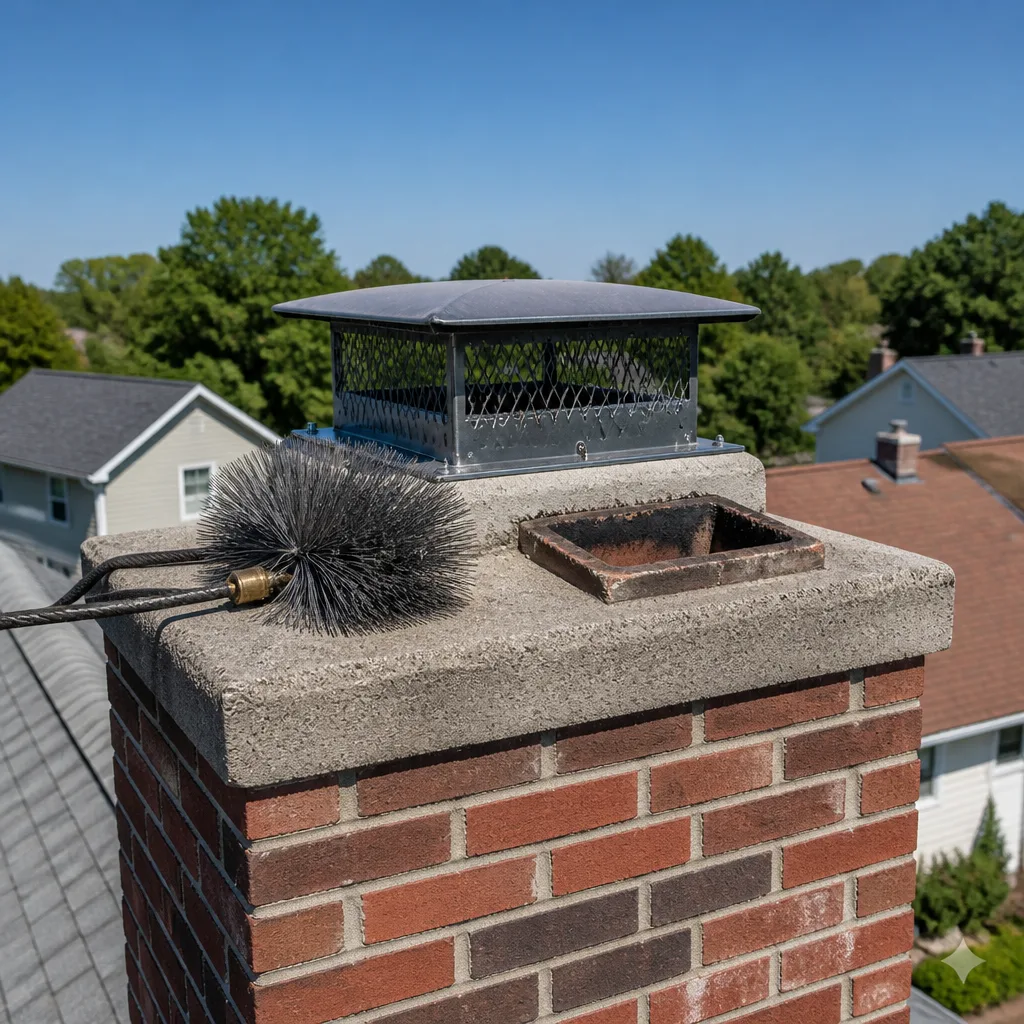 Sweep & inspection
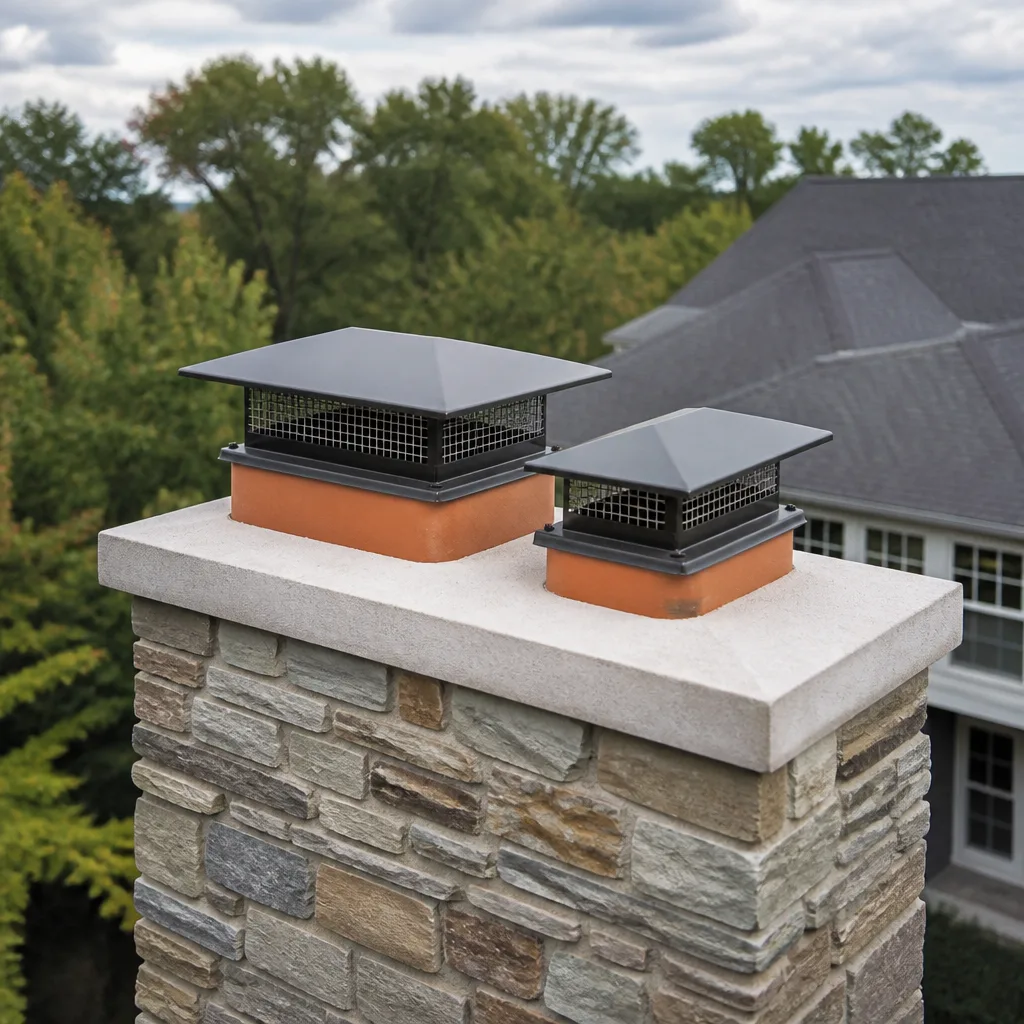 Caps & crowns
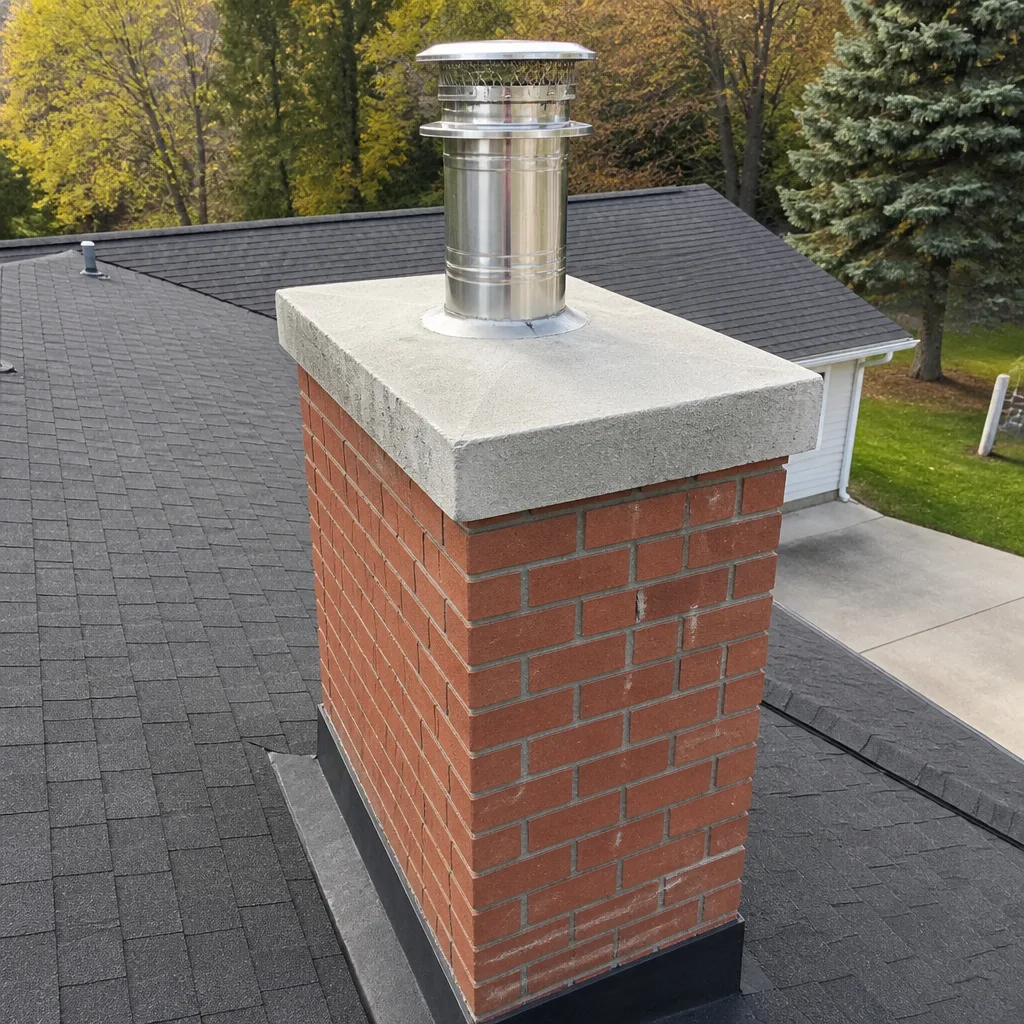 Flue relining
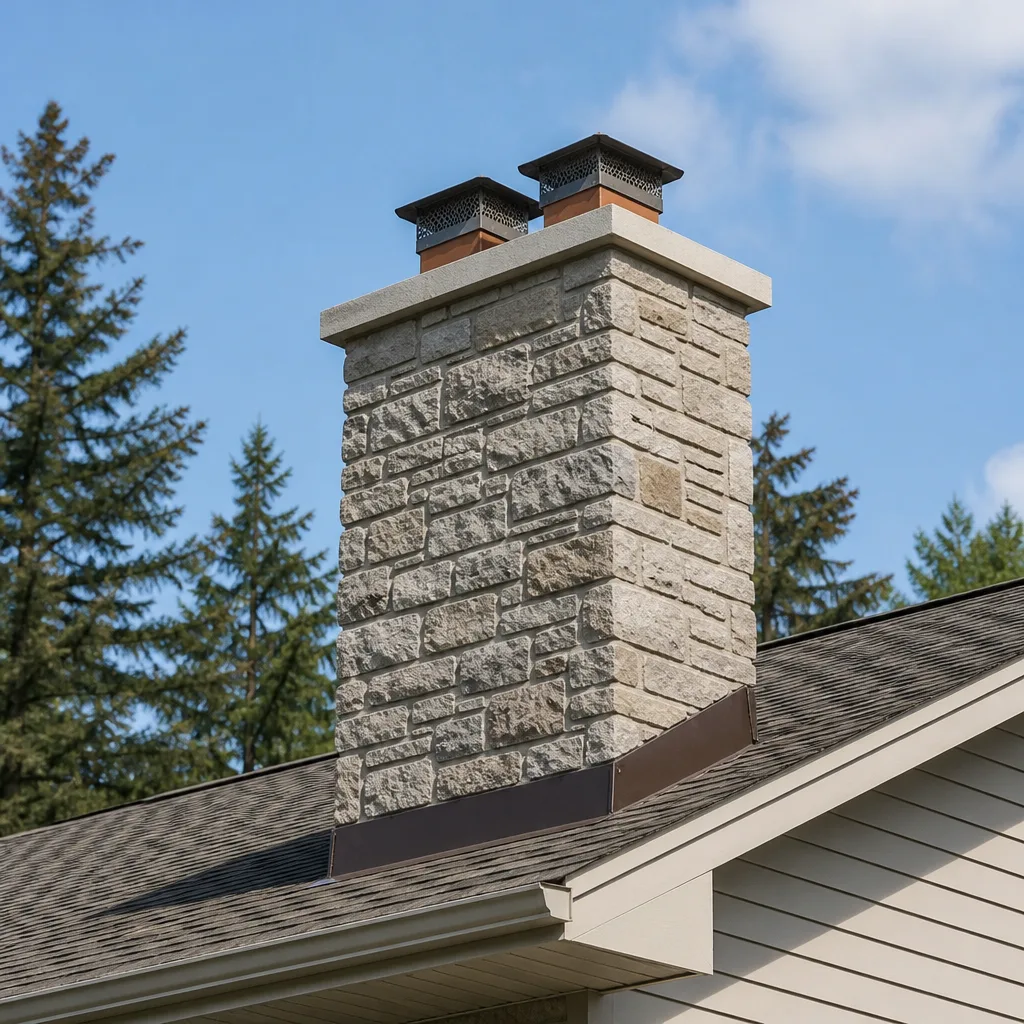 Masonry repair
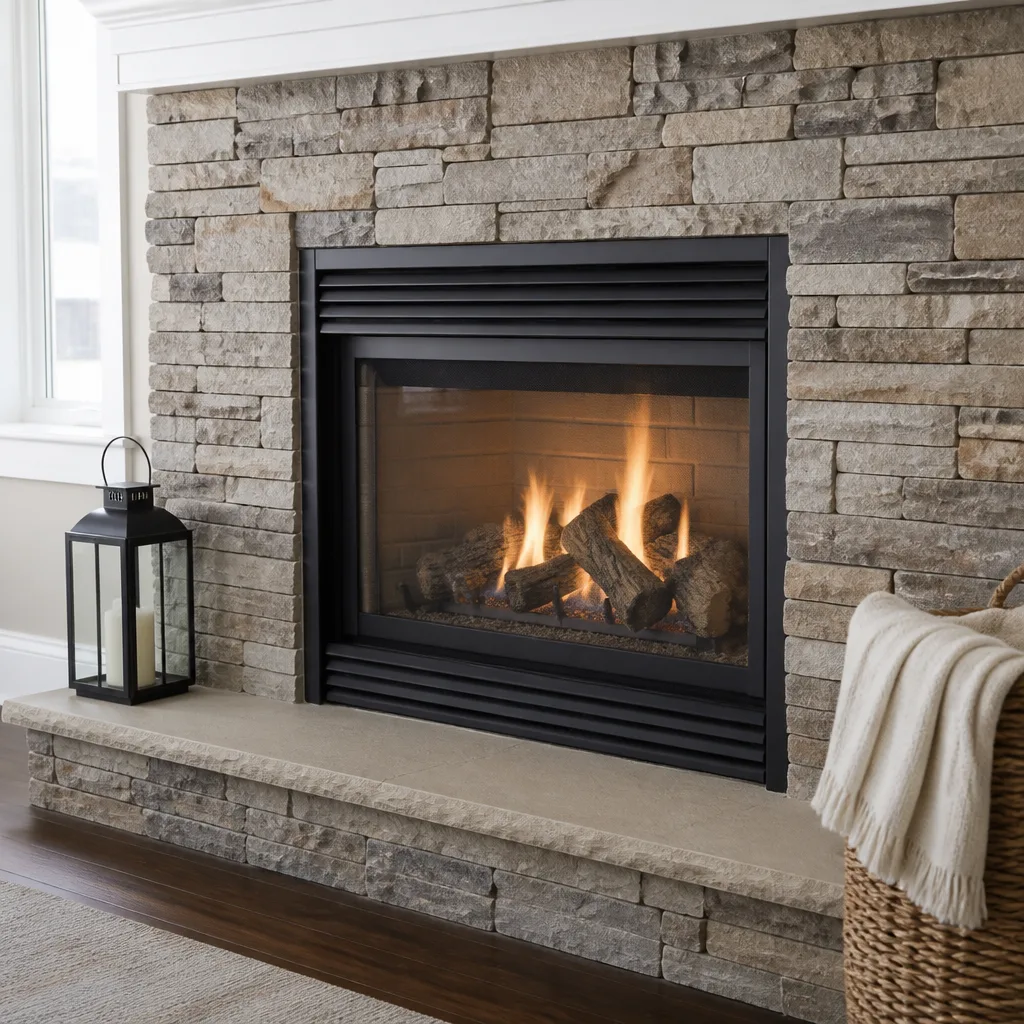 Gas fireplace service
Level 1 sweep and inspection to the NFPA 211 annual standard - flue, crown, cap, and flashing checked and photographed
Chimney sweep logs do not sweep chimneys. They loosen some creosote - which then falls where a brush and vacuum still have to collect it.
Seasonal Chimney Cleaning Care for Universal City: Year-Round Homeowner’s Guide
Here’s a counterintuitive fact for Universal City homeowners: the most common cause of chimney failure we see isn’t creosote buildup from nightly winter fires. It’s thermal expansion damage that happens during the months when the fireplace sits completely dormant. A masonry chimney absorbs heat during the day and sheds it at night, a cycle that repeats roughly 300 times between April and October. Each cycle moves the structure by millimeters. Over three or four years of that invisible flexing, mortar joints crack, crowns shift, and dampers warp. By the time November arrives, what you have isn’t a fireplace ready for use. You have a chimney that needs repair before it can safely hold a fire. The inspection that catches this belongs in the late summer or early fall, before the first cold evening sends you to the switch or the match.
This guide is built for Universal City’s actual climate: the marine layer, the Santa Anas, the summer heat, and that short window when a fireplace actually gets used. For more guides & resources on local home maintenance, see our full blog. If you follow the calendar laid out below, you’ll catch problems while they’re still cheap to fix, and you’ll never find yourself staring at a cracked firebox on the first cold night of the year.
Styles & brands we work with
Quick Answer
A year-round chimney care plan for Universal City means scheduling your annual inspection and sweep in late summer or early fall, checking for animal intrusion after Santa Ana wind events, monitoring masonry crown condition during marine layer months, and addressing any repair findings before the winter burn season starts. Most Universal City homes need one professional sweep per year, but the inspection calendar stretches across all four local seasons because the chimney is exposed to weather 365 days a year, even when the fireplace is dark.
Table of Contents
- Universal City Doesn’t Have Four Seasons. It Has Four Chimney Stressors.
- The Month-by-Month Care Calendar for Universal City
- Marine Layer Season: Moisture, Efflorescence, and the Masonry Crown
- Santa Ana Season: Wind-Driven Damage and Why It Needs Its Own Inspection
- Pre-Season Inspection vs. Post-Season Assessment: What’s Different
- Animal Nesting in Southern California’s Mild Winters: Timing Your Cap Check
- Creosote in a Warm Climate: What Universal City Homeowners Actually Face
- Common Mistakes to Avoid
- When to Call a Professional
- Frequently Asked Questions
- The Bottom Line
Universal City Doesn’t Have Four Seasons. It Has Four Chimney Stressors.
Most chimney care advice you’ll find online is written for places with snow, hard freezes, and a defined heating season. Universal City’s chimney problems are different because the environmental stressors are different. Here’s what actually acts on a chimney in this part of the San Fernando Valley:
1. Fire season (August through October, peaking in September)
During fire season, ambient temperatures routinely exceed 95°F with direct sun exposure pushing roof-level materials past 140°F. The masonry and metal components of a chimney expand under this heat. When evening temperatures drop into the 60s, they contract. This expansion and contraction cycle happens every single day. Older mortar joints, which are more rigid than modern polymer-based repair compounds, begin to spall and crack. The damper, typically a thin cast-iron plate, is especially vulnerable. A damper that’s been heat-cycling for years can warp slowly, and you won’t notice until winter when you reach up to open it and find it doesn’t seat properly (or at all).
2. Marine layer season (May through July, sometimes extending into August)
The marine layer pushes inland moisture into the Valley overnight and in the early morning. It’s not rain, but it’s persistent humidity that condenses on cool masonry surfaces. This moisture sits in the mortar joints and on the crown. Over time, it creates efflorescence (the white mineral staining you see on brick chimneys) and, more seriously, it accelerates freeze-thaw damage in micro-cracks that already exist. In Universal City, the moisture damage isn’t from ice. It’s from repeated wet-dry cycles that dissolve and redeposit minerals, slowly eroding the integrity of the mortar.
3. Santa Ana wind season (October through January, with peaks in November)
Santa Ana winds are the most physically aggressive weather event a Universal City chimney faces. Sustained winds of 30 to 50 mph with gusts to 70 mph hit the roof line at exactly the angle where a chimney presents its broadest face. The wind physically shakes the chimney, tests every loose mortar joint, and drives dust and debris down the flue. It also strips moisture faster than anything else, which sounds good in theory, but rapid drying after a moisture-loaded marine layer season is exactly what causes surface checking and hairline cracks to open up.
4. The winter burn window (December through February, sometimes as early as late November)
This is the one period when the fireplace actually runs. Southern California winter use is lighter than in cold-weather climates, but that presents its own problem: homeowners assume light use means light maintenance. The hazard isn’t the total volume of creosote you produce. It’s that a lighter burning season still produces enough creosote to be a fire risk, while the warm-season damage hasn’t been addressed because the fireplace went unused for nine months.
Understanding these four stressors is the foundation of a real seasonal care plan. The calendar below puts them into action.
The Month-by-Month Care Calendar for Universal City
This isn’t a generic home-maintenance list. Each month addresses what’s actually happening to your chimney in Universal City at that time of year. You’ll notice that some months have no active tasks. That’s intentional. A chimney doesn’t need weekly attention. It needs attention at the right moments.
January: Post-Holiday Check During the Burn Season
- After the holidays, do a visual check of the firebox after each use. Look for anything that wasn’t there before: cracked firebrick, unusual staining, a damper that’s hard to move.
- If you’ve been burning regularly since late November, this is the point to schedule a mid-season sweep if you’re a heavy user. For most Universal City homes, once a year is enough, but consecutive nightly use since Thanksgiving can produce enough creosote to warrant a check.
- Watch for backup when you open the damper. If smoke drifts into the room instead of up the flue, you have a draft problem that needs professional attention. This is often the first symptom of animal nesting or a partially blocked flue.
February: Wind Damage Assessment
By February, the Santa Ana season has typically had two or three strong events. Walk around the exterior of your home and look at the chimney. Use binoculars if you need to.
- Are there any shingles, pieces of mortar, or debris on the roof near the chimney?
- Is the chimney cap still seated properly? A tilted cap means the wind has shifted it, which leaves the flue open to animals and debris.
- Do you see any new cracks in the crown or in the top rows of brick?
If you find anything, call a chimney repair specialist in Universal City to assess it before it becomes a bigger problem.
March: Post-Season Assessment
March is when the burn window typically closes for most households. This is the time for the post-season assessment (detailed below), which is different from a pre-season inspection. Before you stop using the fireplace for the year, make note of how it performed: any smoke issues, any unusual smells, any difficulty lighting or keeping a fire going. Write those down somewhere accessible. You’ll forget the details by August.
April: Cleanout Habit
If you use your fireplace even occasionally, make a habit of cleaning out the ash in April after your last use of the season. Ash left in place for months absorbs moisture from the marine layer and becomes acidic. Acidic ash paste sitting against the firebox floor and walls is a slow but real corrosion agent. Scoop it out (use a metal ash bucket with a lid), and leave a thin layer (about half an inch) to protect the firebrick.
May: Marine Layer Watch Begins
May is when the marine layer arrives in strength. The air is damp overnight, and the chimney masonry absorbs moisture from the outside while the interior stays dry, creating a moisture gradient through the wall thickness. Check for efflorescence. It appears as white, chalky mineral deposits on the brick, and it’s a direct signal that water is moving through the masonry. A little efflorescence is normal. Heavy, recurring efflorescence means the water is carrying mortar salts out of the joints, and that’s a structural problem, not a cosmetic one.
June: Nesting Season is in Full Swing
Southern California’s bird nesting season runs roughly from March through August, but June is when chicks from early broods are active and invasive species like starlings and sparrows are looking for cavities. The chimney flue, especially if the cap is missing or damaged, is a prime target. Listen for bird activity in the chimney early in the morning. Look for nesting material hanging from the cap or visible at the top of the flue. If you see birds repeatedly flying into or out of the chimney, do not light a fire. The nest is a fire and carbon monoxide hazard. Call a sweep to remove it and install or repair the cap.
July: The Planning Month
This is the month to schedule your annual inspection and sweep. July is the sweet spot in Universal City for a few reasons—just be sure you’re up to date on Chimney Cleaning Permits, Codes & Inspections in CA: What You Need to Know:
- You’ll beat the fall rush. Sweeps book out weeks in advance in September and October.
- The weather is warm and dry, which means the inspection findings are accurate. You want to assess the chimney when it’s not damp from rain or marine layer moisture.
- If the inspection finds anything that needs repair, you have August, September, and October to get it done before the burn season.
August: The Annual Inspection and Sweep
This is the single most important maintenance event of the year. The inspection catches everything that heat stress during fire season has done to the chimney before you try to use it. The sweep removes any creosote from the previous burn season (yes, even light creosote should be removed; it’s hygroscopic and attracts moisture through the summer).
If you remember only one thing from this entire guide: get your chimney inspected and swept in August. Not October. Not November. By November, the technicians are booking three weeks out, and the damage from summer heat has had extra months to compound. For a detailed look at pricing, see our Chimney Cleaning Cost Breakdown: The Universal City Homeowner’s Reference for 2026.
September: Address Repair Findings
If your August inspection identified crown cracks, missing mortar joints, a warped damper, or creosote glaze, September is the month to fix it. The weather is still warm and dry, which is ideal for mortar work, crown repair, and damper replacement. Waiting until the first cold snap means enduring a cold house while the work is done.
October: Post-Santa-Ana Check
The first significant Santa Ana event usually arrives in October. After it passes, do an exterior visual check. Look for shifted caps, new debris on the roof, or anything that indicates wind-driven damage. This is a quick five-minute check, but it’s the difference between catching a dislodged cap now and finding a family of raccoons in the flue in December. (Yes, raccoons in chimneys are common in Universal City. The mild climate means they breed nearly year-round.)
November: Pre-Season Test Fire
Before the first real burn of the season, do a test fire:
- Open the damper fully and verify it moves freely.
- Prime the flue by holding a lit piece of newspaper up into the damper opening for 10-15 seconds. This warms the air column and establishes the draft.
- Light a small fire with clean, dry kindling. Watch for smoke spillage into the room. If smoke enters the room, the draft isn’t established, or something is blocking the flue.
- Once the kindle fire burns clean, add a single log and check for smoke again.
If the test fire smokes or the damper is stuck, do not attempt to burn through the problem. Call a professional—our Chimney Cleaning Emergency Preparedness Guide for Universal City Homes covers what to do next. The smoke is a clue, not a challenge.
December: Burn Season Monitoring
You’re in the burn window now. Use your fireplace normally, but check the firebox after each use for signs of change. The season in Universal City is shorter and warmer than in most of the country, which leads homeowners to assume that any old wood and any old burning practice is fine. It’s mostly true that the risks are lower here, but a chimney fire doesn’t care about the climate. Creosote is creosote, and a chimney fire can happen in a Universal City home in the middle of a 60-degree winter evening just as easily as it can in a Minnesota blizzard.
Marine Layer Season: Moisture, Efflorescence, and the Masonry Crown
Now let’s go deeper into the specific failure modes Universal City homeowners should know about, starting with the one that’s least understood: the marine layer’s effect on chimney masonry.
From May through early August, the marine layer rolls into the Valley overnight. Humidity levels in the 70-80% range are common at 5 a.m., even when the afternoon drops into the 20s. That’s a brutal moisture cycle for a chimney. Here’s what it does:
The masonry absorbs moisture from the air. Brick and mortar are porous; they take in ambient water vapor like a sponge. When the afternoon sun hits, the surface dries rapidly. The exterior of the masonry dries faster than the interior, creating stress in the material matrix. Over hundreds of these cycles, hairline cracks form in the mortar joints and in the surface of softer brick.
Then comes the efflorescence. As moisture migrates through the masonry, it dissolves mineral salts from the mortar. When the moisture reaches the surface and evaporates, the salts are left behind. That’s the white chalky deposit you see. It’s not mold. It’s not paint. It’s mineral salts from inside your chimney’s mortar joints being pulled to the surface.
A little efflorescence is a cosmetic curiosity. Heavy, recurring efflorescence is a structural indicator. It means water is moving through the masonry at a rate that’s dissolving the mortar. Left untreated, the mortar joints lose their binding strength, and the masonry begins to spall (flake off in pieces). By the time you see spalling brick faces on the chimney exterior, the water damage is well advanced.
The most vulnerable part of the chimney to marine layer moisture is the crown. The crown is the concrete cap on top of the chimney that seals the top from water intrusion. A properly built crown overhangs the brick by at least an inch on all sides, directing water away from the masonry. When crowns crack (which they do, especially after exposure to consistent thermal cycling), water enters the chimney from the top and runs down the interior. From there, it attacks the firebrick, the damper assembly, and eventually the smoke chamber.
The practical takeaway for Universal City homeowners: check the crown in May and again in July. If you can see cracking, hairline fissures, or the crown is pulling away from the flue tile, address it before the marine layer has another full season to inject water into the structure. A crown repair is a few hundred dollars. A full masonry rebuild is thousands.
Santa Ana Season: Wind-Driven Damage and Why It Needs Its Own Inspection
Santa Ana winds are the second distinct chimney stressor in Universal City, and they warrant their own inspection event because the damage they cause is different from anything else in the seasonal cycle.
Here’s the physics. A Santa Ana event brings sustained winds of 30 to 50 mph, typically from the northeast, sometimes for 24 to 48 hours straight. The chimney, a vertical masonry structure rising three to eight feet above the roofline, acts as a sail. The wind applies lateral force to the entire exposed chimney surface. Foundation engineering standards account for wind loads, and most Southern California chimneys are built to withstand typical gusts. But “withstand” doesn’t mean “unaffected.”
What the wind does to a chimney in practical terms:
- Tests every existing crack. If the mortar joints are already cracked from summer thermal cycling, the wind force flexes the chimney enough to widen those cracks. A hairline crack becomes a visible crack. A visible crack becomes a structural weakness.
- Dislodges or damages the cap. The cap is a metal component attached at the very top of the chimney, directly in the full force of the wind. A loose cap gets torqued. A damaged cap gets torn free. Once the cap is compromised, the flue is open to debris, animals, and direct rain entry.
- Drives debris down the flue. Even a minor Santa Ana event carries dust, leaves, and small twigs. Over hours of consistent wind, a surprising amount of that material ends up inside the chimney. In some cases, we’ve seen enough wind-driven debris to partially obstruct the flue.
- Rapidly dries the masonry. This is the counterintuitive one. After months of marine layer moisture, the masonry is hydrated. Santa Ana air is hot and extraordinarily dry (single-digit humidity is typical). The sudden moisture extraction causes surface checking and can open new fissures in older mortar.
The post-Santa-Ana inspection is a distinct event because it catches failures that happen suddenly, not gradually. Here’s what to check after the first significant wind event of the season (usually October):
- Look for debris on the roof near the chimney. Any shingles, mortar fragments, or pieces of metal indicate wind-related failure.
- Check the cap. It should sit level. A tilted cap means the mounting hardware has loosened or the flue tile itself has shifted.
- Do a quick interior check with a flashlight. Open the damper and look up. If you see unusual debris, animal nesting material, or a change in the amount of light coming through the flue, something has moved or entered.
- Listen for wind noise inside the chimney. If you hear a whistle during the next wind event, it means air is finding a gap somewhere in the structure. That gap is a moisture entry point during the marine layer season.
The post-Santa-Ana check takes five minutes. Most homeowners skip it because they assume the chimney is fine if nothing is visibly broken. But visible breakage is a late-stage indicator. The point of the check is to catch the shift, the new crack, the partially dislodged cap before it has six more months to degrade.
Pre-Season Inspection vs. Post-Season Assessment: What’s Different
Most homeowners think of chimney service as a single event: the annual sweep. But there’s a meaningful difference between what should be checked before the burn season and what should be assessed after it ends. Confusing the two is a common source of missed problems.
Pre-Season Inspection (July/August/September)
The goal here is: Is this chimney safe to burn in right now? The focus is on conditions that create immediate fire or carbon monoxide risk. A pre-season inspection includes:
- Creosote accumulation in the flue and smoke chamber
- Damper operation and seating
- Flue liner integrity (a cracked liner is a fire risk, not just a performance issue)
- Animal nests or obstructions
- Combustion air supply
- Smoke chamber and firebox condition
The pre-season inspection answers a yes/no question: can this fireplace operate safely for the coming burn season? If anything fails, it gets fixed before the first fire.
Post-Season Assessment (February/March)
The goal here is different: What did this burn season do to the chimney, and what happened over the summer while it was dormant? The focus is on wear, degradation, and emerging issues that won’t become critical until next season but should be addressed now while there’s time. A post-season assessment includes:
- Masonry crown condition after summer heat cycling
- Mortar joint cracking from thermal expansion
- Firebrick wear in the firebox
- Creosote characteristics (glazed creosote indicates the burning habits or wood quality need adjustment)
- Evidence of water intrusion from summer marine layer exposure
- Signs of animal activity during the nesting season
The post-season assessment is where you catch the slow-motion problems: the crown crack that’s been widening for two years, the spalling firebrick that’s gotten worse each burn season, the warping damper that’s not quite seating anymore. These issues don’t present as emergencies. They’re gradual. That’s exactly why they get missed when everyone’s focus is on pre-season readiness.
In practice, the chimney sweep professionals in Universal City who understand the local climate fold both of these into a single annual visit: the inspection and sweep happens in late summer, covering pre-season readiness, and the observations made then serve double duty. But it’s worth understanding the distinction. When you call for service, being able to say “I want a pre-season inspection” tells the technician exactly what you need.
Animal Nesting in Southern California’s Mild Winters: Timing Your Cap Check
In most of the country, animal nesting is a seasonal issue. Birds nest in the spring, raccoons and squirrels seek shelter in the fall, and the deep freeze of winter clears everything out. Universal City doesn’t work that way. The mild climate means the nesting season never really stops, and the chimney is a year-round target.
The species you’re most likely to encounter:
- House sparrows and European starlings. These are the two most common chimney nesters in the Valley. Both species are cavity nesters that actively seek out openings like uncapped flues. Their nests are dense, flammable masses of twigs, grass, and debris that can fully obstruct a flue in a matter of weeks.
- Chimney swifts. Native birds that historically nested in hollow trees and now use chimneys. Chimney swifts are protected under the Migratory Bird Treaty Act, which means you cannot legally remove an active nest while the swifts are using it. This matters for timing: if swifts have established a nest in your chimney, you may need to wait until the nesting season ends before removal is legal.
- Raccoons. Universal City’s raccoon population is robust. A female raccoon looking for a den site sees an uncapped chimney as a perfect cavity. Raccoons in chimneys are noisy, destructive, and potentially aggressive if cornered.
- Squirrels. Less common than raccoons but present. Squirrels can enter through smaller openings and are difficult to evict once established.
The overlap between Southern California’s bird nesting season (roughly March through September) and the winter burn window (December through February) is the key timing insight. In colder climates, the nesting season and the burn season don’t overlap much, so you can safely inspect for animals in the spring without worrying about a fire the next week. In Universal City, the nesting season in full swing by May, June, and July, which is also the recommended time for your annual inspection and sweep. A good inspector checks for active nests and advises on cap installation or repair before the burn season begins.
The practical takeaway:
- Keep the cap in good condition. The cap is the only barrier between the flue and every animal in the neighborhood. A missing or damaged cap is an open invitation.
- Inspect after wind events. Santa Ana winds dislodge caps and create the openings animals exploit.
- Never ignore chimney noises. Birds, raccoons, and squirrels make noise. If you hear scratching, chirping, or movement inside the chimney, investigate before lighting a fire. A fire under an active nest is a chimney fire waiting to happen, and the animals rarely survive.
- Time the cap inspection with your annual service. The August inspection and sweep should include a thorough cap check. If the cap is damaged, replace it before the burn season.
Creosote in a Warm Climate: What Universal City Homeowners Actually Face
Creosote is the catch-all term for the combustible residue that builds up in chimneys, and it’s the reason chimney sweeping exists as a trade. But the creosote situation in Universal City is different from what you’ll read in guides written for cold-weather markets. Understanding the difference helps you make better decisions about how often to sweep and what to watch for.
In cold climates, the burning season is long and intense. Fires run hot for months, producing layers of creosote that accumulate quickly. The sweep is essential because the buildup reaches dangerous levels in a single season. In Universal City, most homeowners burn sporadically from December through February, and many fireplaces go years without seeing heavy use.
The volume of creosote produced is lower. But the risk profile isn’t lower in proportion. Here’s why:
- Light creosote is still combustible. It takes surprisingly little creosote to fuel a chimney fire. The threshold for “sweep it now” is lower than most homeowners assume.
- Creosote is hygroscopic. It absorbs moisture from the air. During marine layer season, creosote deposits inside the flue absorb ambient moisture and expand. This creates a corrosive environment that accelerates liner deterioration.
- Glazed creosote forms differently in a warm climate. Glazed creosote (the hard, shiny, tar-like type that’s most dangerous) forms when creosote is subjected to repeated heating without complete combustion. Southern California’s sporadic burning patterns sometimes produce glaze at lower total volume than you’d see in a colder climate. It doesn’t take much glaze to constitute a serious fire hazard.
- Summer heat bakes the creosote. When the flue sits at 140°F through July and August, the creosote that formed last winter gets baked. It hardens. It becomes more difficult to remove and more combustible per unit volume.
The right approach in Universal City is to sweep annually regardless of how often you burn. The sweep removes whatever creosote has accumulated (whether it’s light, medium, or glazed), and the inspection catches everything else. If you burn more than three times per week during the winter, you may need a mid-season check. But for most homeowners in the area, one annual sweep in August is the right frequency.
One more note on wood quality, because it directly affects creosote. In Southern California, firewood is often purchased from big-box stores or roadside sellers, and the wood is sometimes not properly seasoned. Green (unseasoned) wood produces more creosote per unit burned than dry wood. If you’re buying wood, ask about moisture content. Kiln-dried or properly seasoned firewood with moisture content below 20% burns cleaner. If your fire smokes more than you’d expect, or if the glass on your fireplace doors clouds up with black residue quickly, the wood may be the problem, not the chimney.
Common Mistakes to Avoid
- Believing that light use means no maintenance. The most common mistake in Universal City. Even if you burn four fires a year, the chimney is still exposed to summer heat, marine layer moisture, and Santa Ana wind. The maintenance need comes from the environment, not just the firebox.
- Scheduling the sweep in November. By November, the fall rush is in full swing, and the inspection that should have happened in August is now competing with every other homeowner’s last-minute panic. Schedule in July for August service.
- Ignoring the chimney cap. The cap is cheap, small, and often overlooked. It’s also the single most important component for preventing animal intrusion, water entry, and wind-driven debris. A missing cap is a four-season problem.
- Assuming the smoke detector will warn you. Smoke detectors warn you about smoke in the room. They don’t warn you about creosote buildup inside the flue, a cracked liner, or a carbon monoxide problem from incomplete combustion. By the time the detector fires, you have a fire in progress, not an early warning.
- Cleaning the chimney yourself. There’s a time for homeowner maintenance, and there’s a time for professional tools and training. Chimney cleaning requires specialized brushes, a proper understanding of the flue geometry, and the ability to spot problems while working. A homeowner can remove surface creosote, but that’s not a substitute for an inspection by someone who sees chimneys every day.
- Deferring crown repair because it “doesn’t look that bad.” Crown cracks only get worse. The cost of a crown repair is a fraction of what you’ll pay when water intrusion damages the firebox, the damper, and the smoke chamber. Crowns are one of those things where early action saves real money.
- Burning construction scraps or treated lumber. The smoke from pressure-treated wood, plywood, or painted lumber contains chemicals that corrode the liner and produce toxic fumes. It’s not just bad practice. It damages the chimney in ways that regular wood doesn’t.
When to Call a Professional
There are clear thresholds where a homeowner’s visual check is no longer sufficient and a professional inspection becomes necessary. Call a sweep if you notice any of the following:
You see creosote accumulation during a visual check (black, shiny, or crusty deposits in the flue or firebox). You hear animals or see nesting material in the chimney. Your damper doesn’t open or close properly. Smoke enters the room during a fire. You notice efflorescence on the exterior masonry that keeps returning after you wipe it away. Your chimney cap is missing, damaged, or sitting at an angle. There are visible cracks in the crown or in the mortar joints. You smell a persistent odor from the fireplace, especially during high humidity.
None of these are “keep an eye on it and see” situations. Each one indicates a condition that will worsen with time or a hazard that could become active without warning. Causeway Chimney Sweep offers free estimates in Universal City. If you’ve noticed any of these signs, call (877) 500-2276 and we’ll take a look. If it turns out to be nothing, you’ve lost nothing but a phone call. If it’s something, you’ve caught it early.
Frequently Asked Questions
Once a year for most homes. The sweep should happen in August, before the fall wind season, and should include a full inspection. Homes that burn more than three times per week during the winter may benefit from a mid-season sweep. Homes that burn infrequently still need the annual inspection because the chimney is exposed to weather year-round even when the fireplace is dark. Call (877) 500-2276 to schedule.
A standard chimney sweep and inspection in the Universal City area typically runs between $150 and $300, with repair findings (crown work, damper replacement, liner repair) priced separately after the inspection. The exact price depends on the flue condition, roof accessibility, and any obstructions. A detailed quote is provided before any work begins.
Late summer (July or August) is the right time in Universal City for two reasons: the summer heat has finished its worst thermal expansion damage, and you have months to complete repairs before the winter burn season. A post-Santa-Ana check in October adds a second useful inspection point at no cost beyond your time.
Yes. The cap serves three functions year-round: it blocks animal entry (the nesting season is effectively year-round in the mild climate), it prevents water from entering the flue during marine layer condensation and occasional rain, and it stops wind-driven debris from Santa Ana events. A damaged or missing cap is not a minor issue. It’s an open flue. Call (877) 500-2276 for a cap inspection.
The signs are usually audible first: scratching, chirping, or movement sounds inside the chimney, most often in the early morning. You may also see nesting material (twigs, grass, debris) hanging from the cap or visible at the top of the flue. A strong, musty odor can also indicate a nest. If you suspect an animal is present, do not light a fire. Call a professional who can remove the animal (or consult on the legal handling of protected species like chimney swifts) and then cap the flue properly.
You can do basic maintenance: remove ash from the firebox, do visual checks of the exterior masonry and cap, and maintain the wood supply. The actual sweeping and inspection work requires specialized brushes sized to your flue, proper access to the roof, and the trained eye to spot problems in the liner and smoke chamber. More importantly, the inspection is the real value of the service. A professional sees what a homeowner misses.
The marine layer brings persistent overnight humidity that condenses on the cool masonry surface. Over months, this moisture enters the mortar joints and crown, carrying mineral salts outward (causing efflorescence) and weakening the mortar through repeated wet-dry cycles. The same moisture affects any creosote inside the flue, making it more corrosive. The practical answer: monitor the crown and mortar in May through July, when the marine layer is strongest.
The Bottom Line
Universal City’s chimney care calendar doesn’t follow the traditional American model of fall inspection and spring clean-out. It follows four local patterns: summer heat cycling, marine layer moisture, Santa Ana winds, and the short winter burn. The homeowner who understands those four forces and schedules maintenance around them avoids the expensive surprises that catch everyone else off guard. Get your annual inspection
See the difference
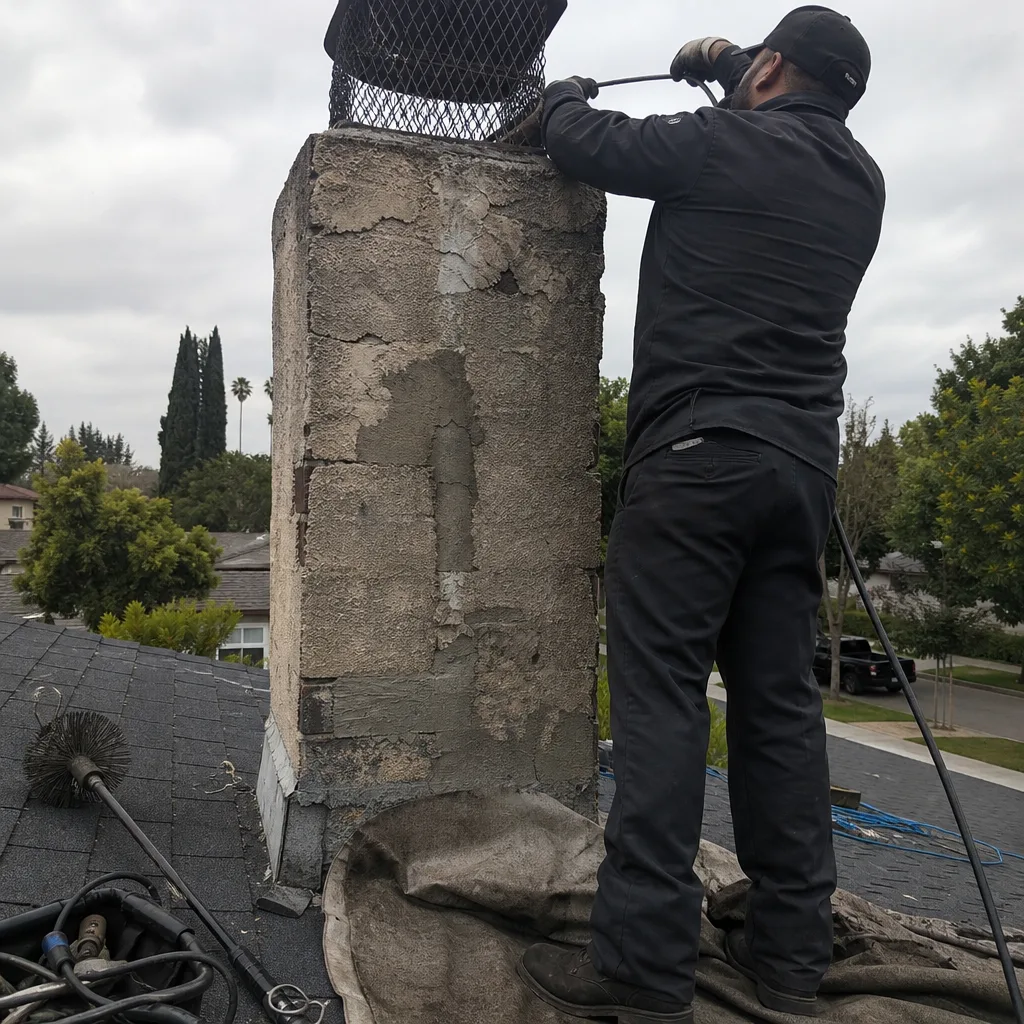 Before
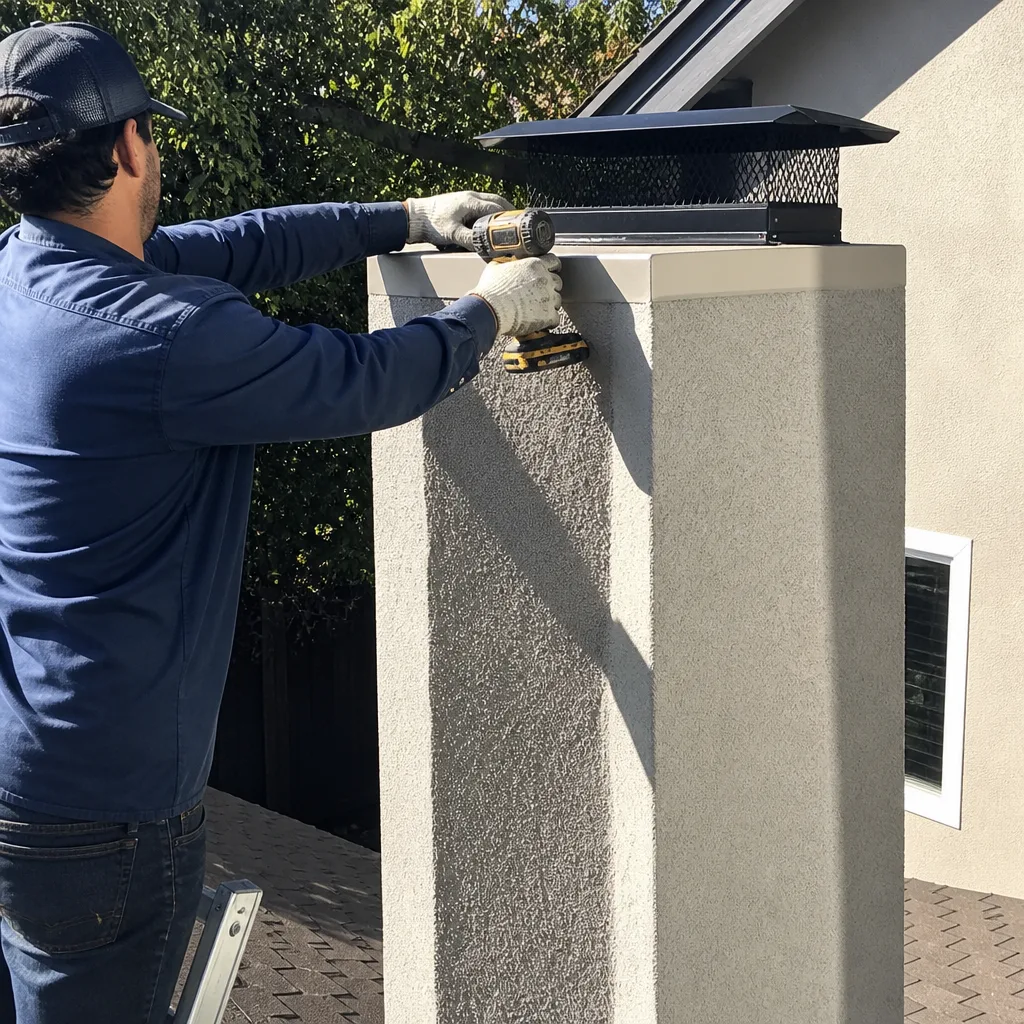 After
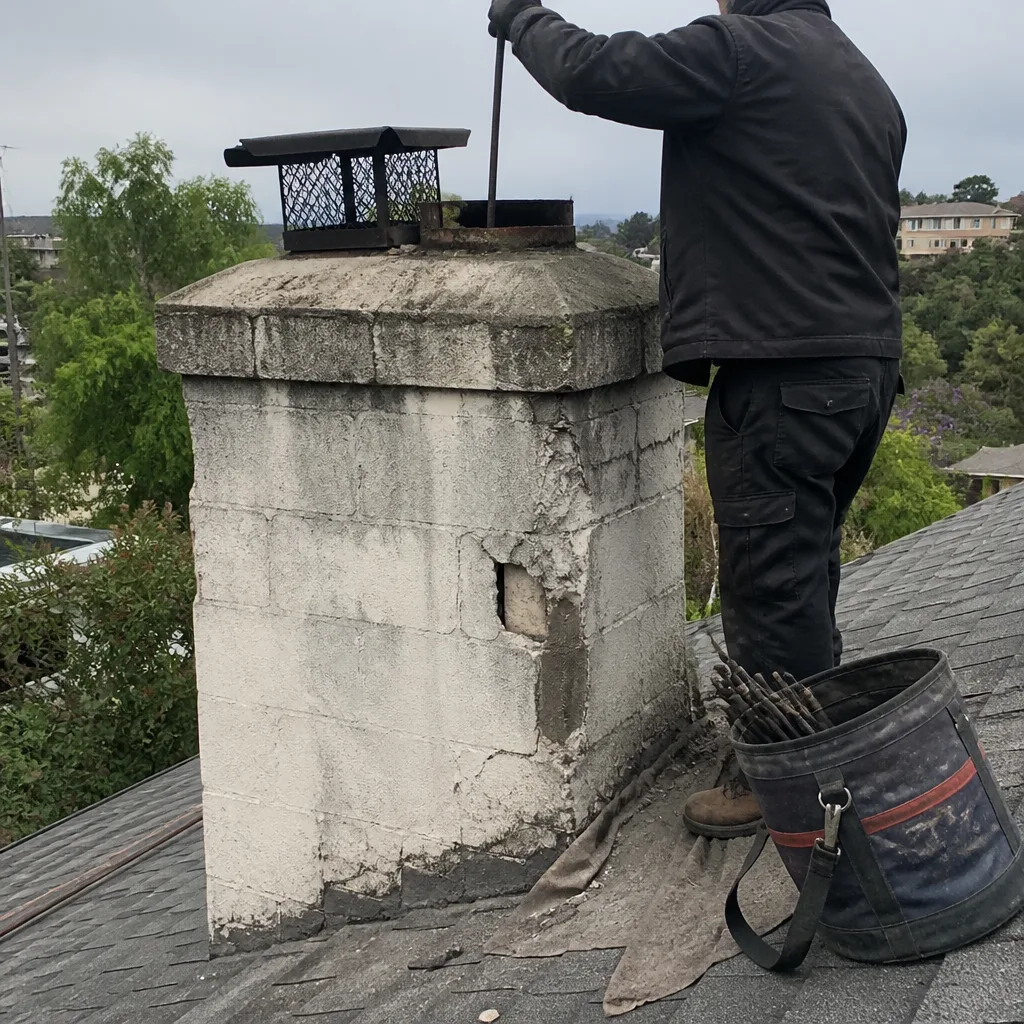 Before
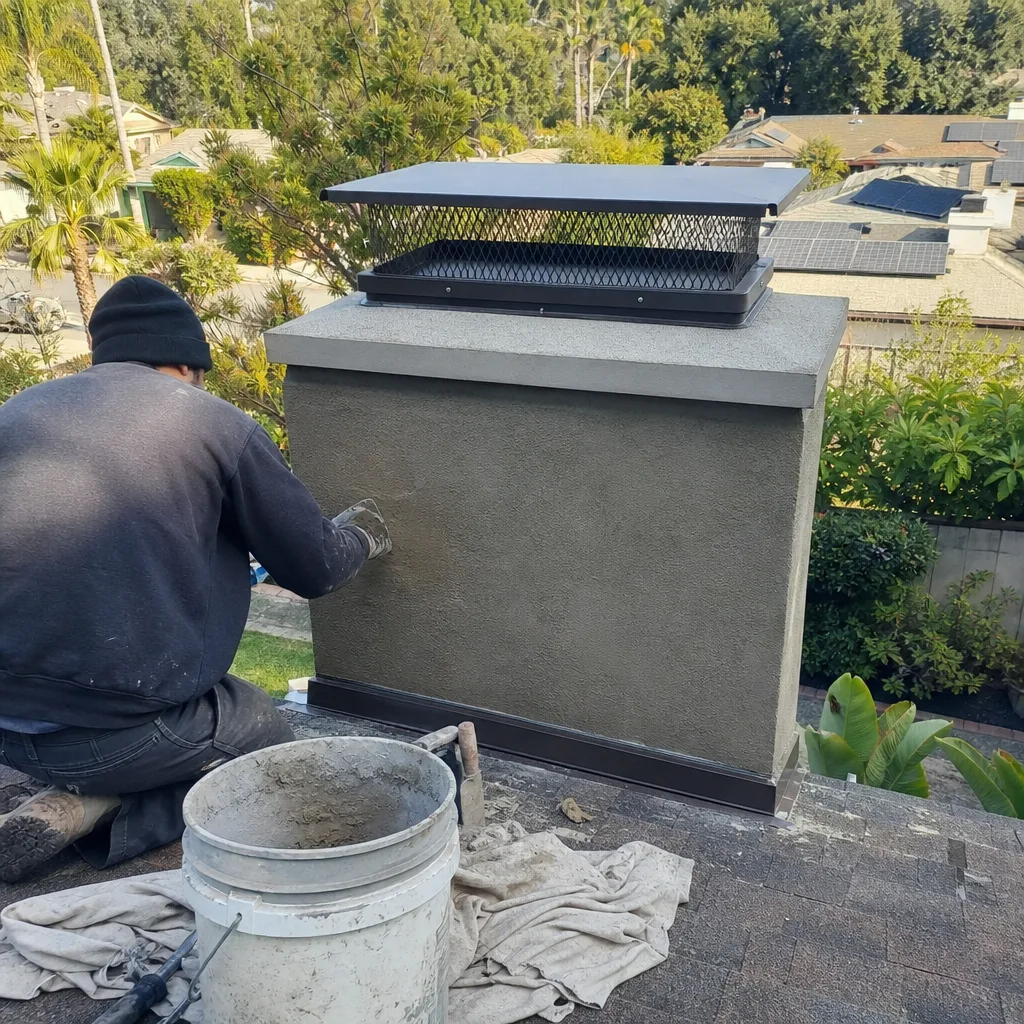 After
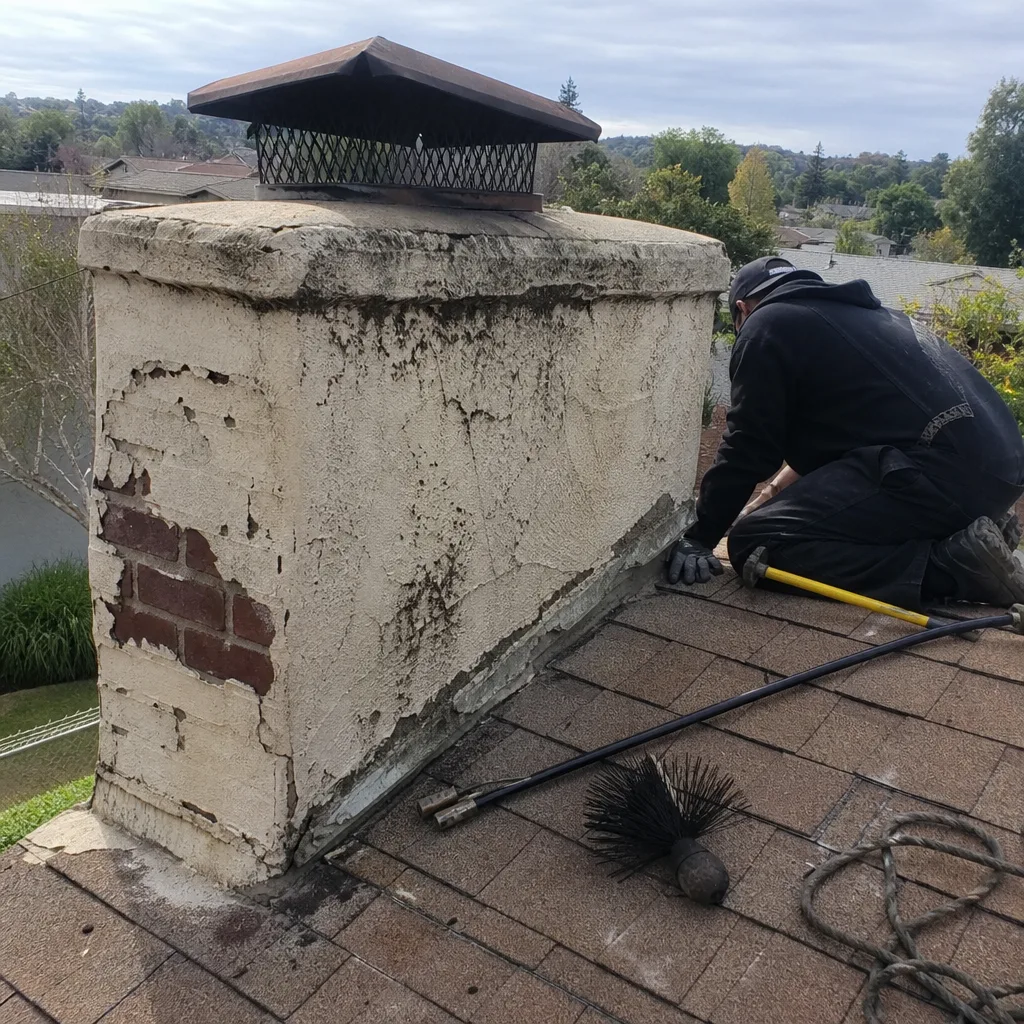 Before
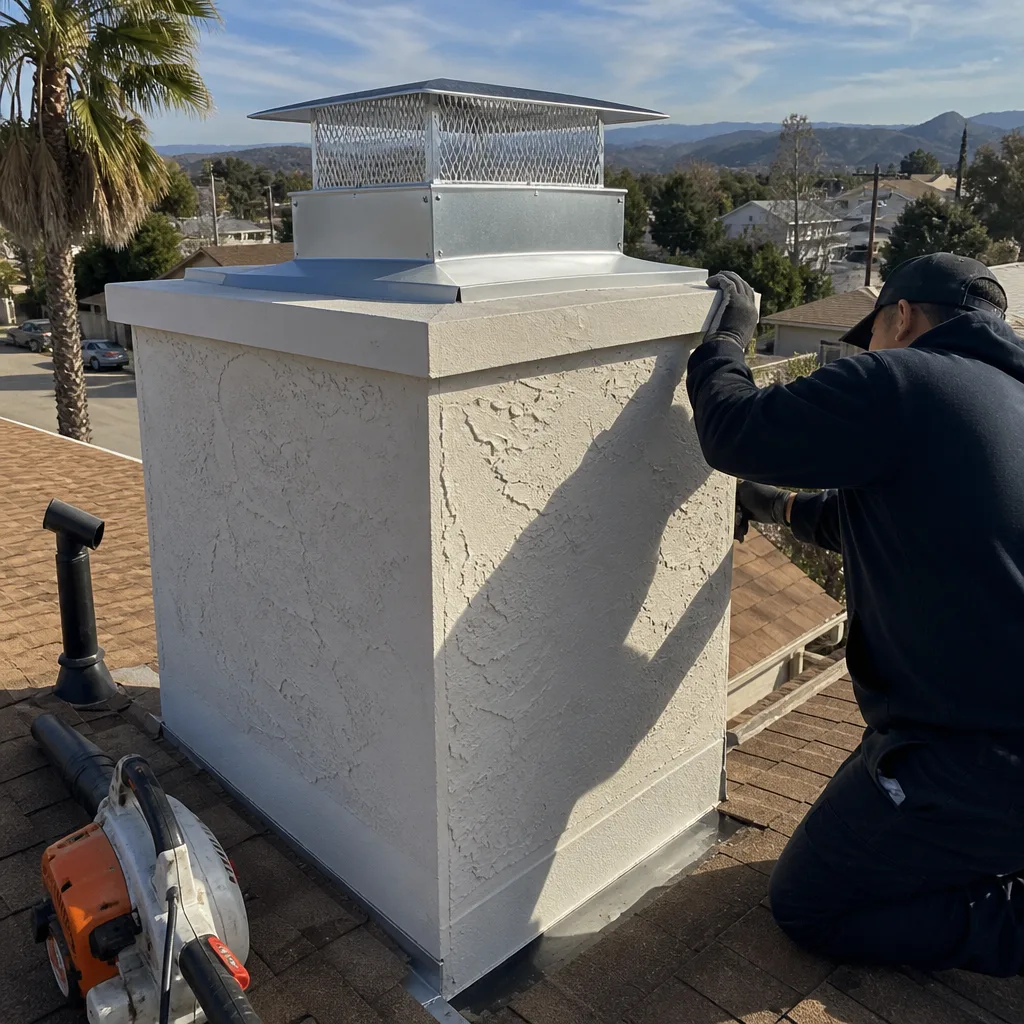 After