Last updated October 31, 2026
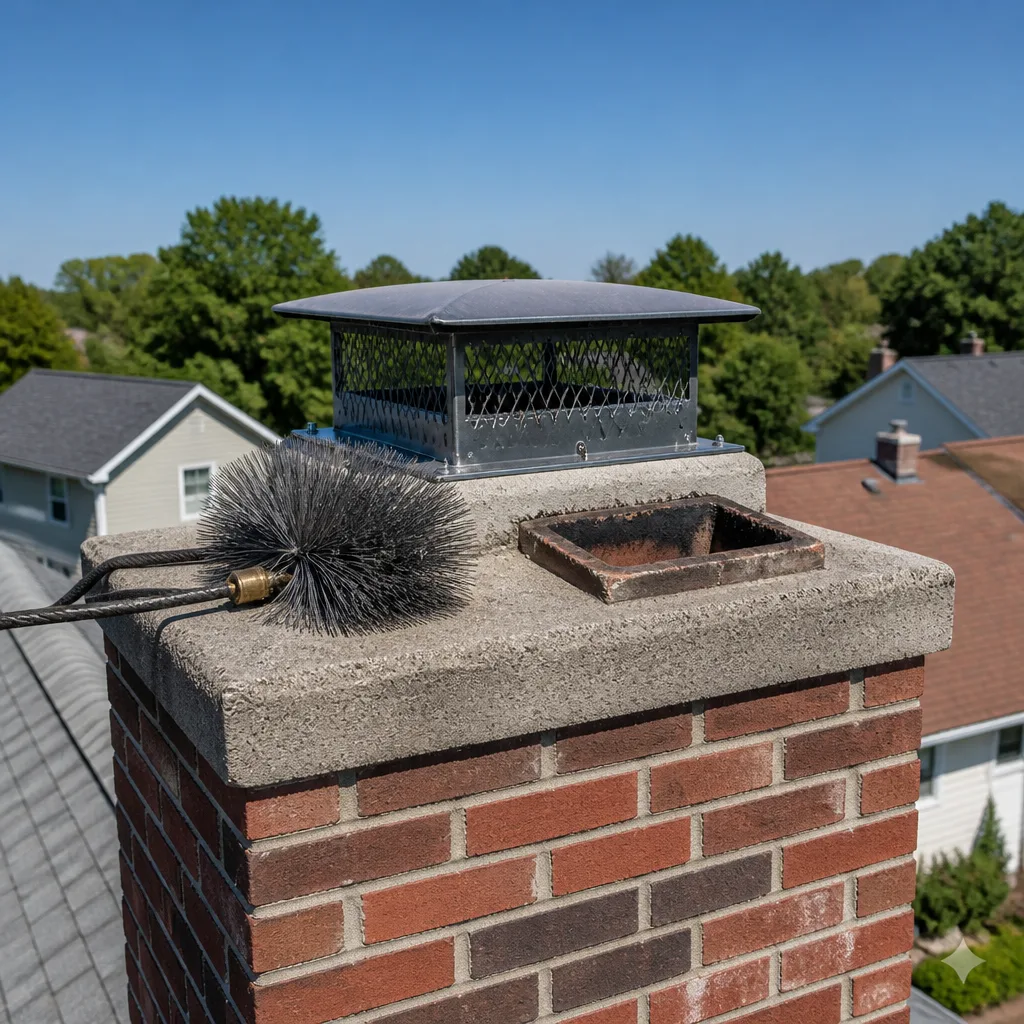 Sweep & inspection
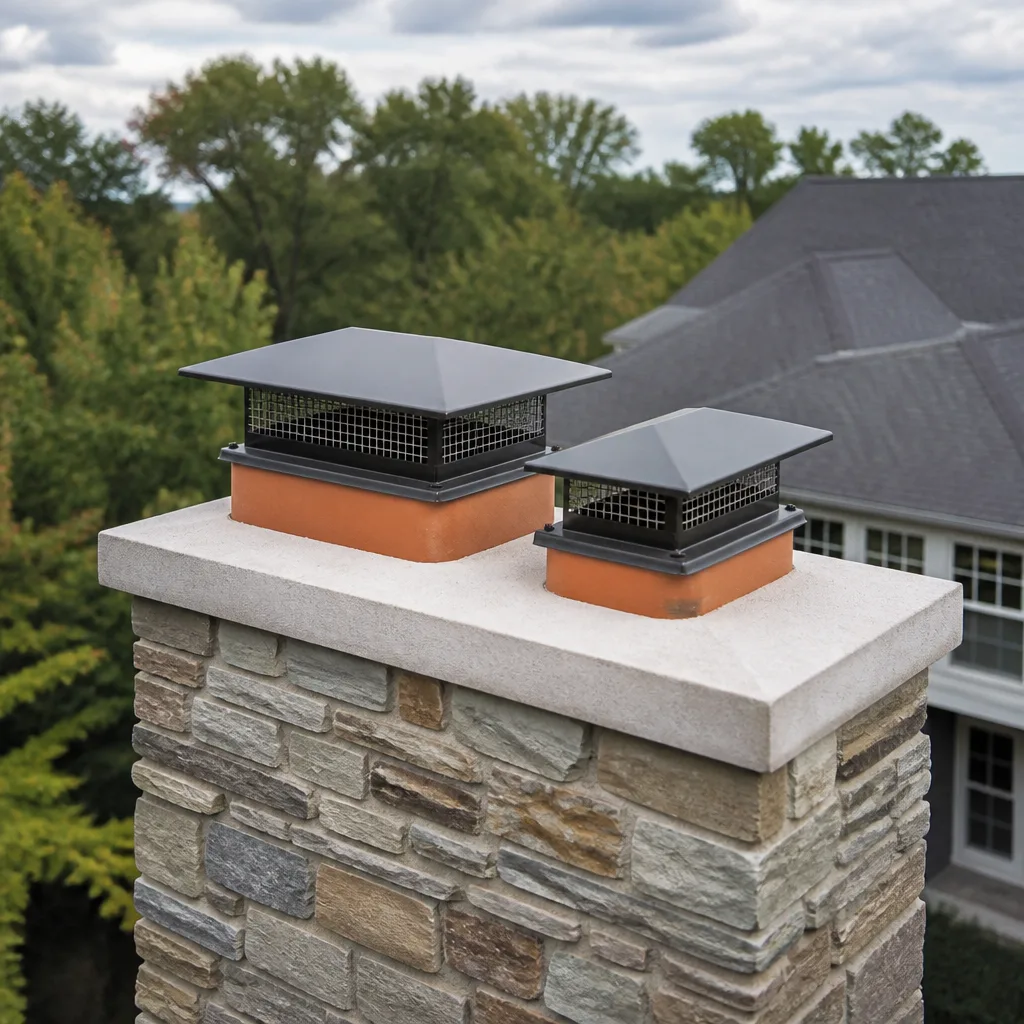 Caps & crowns
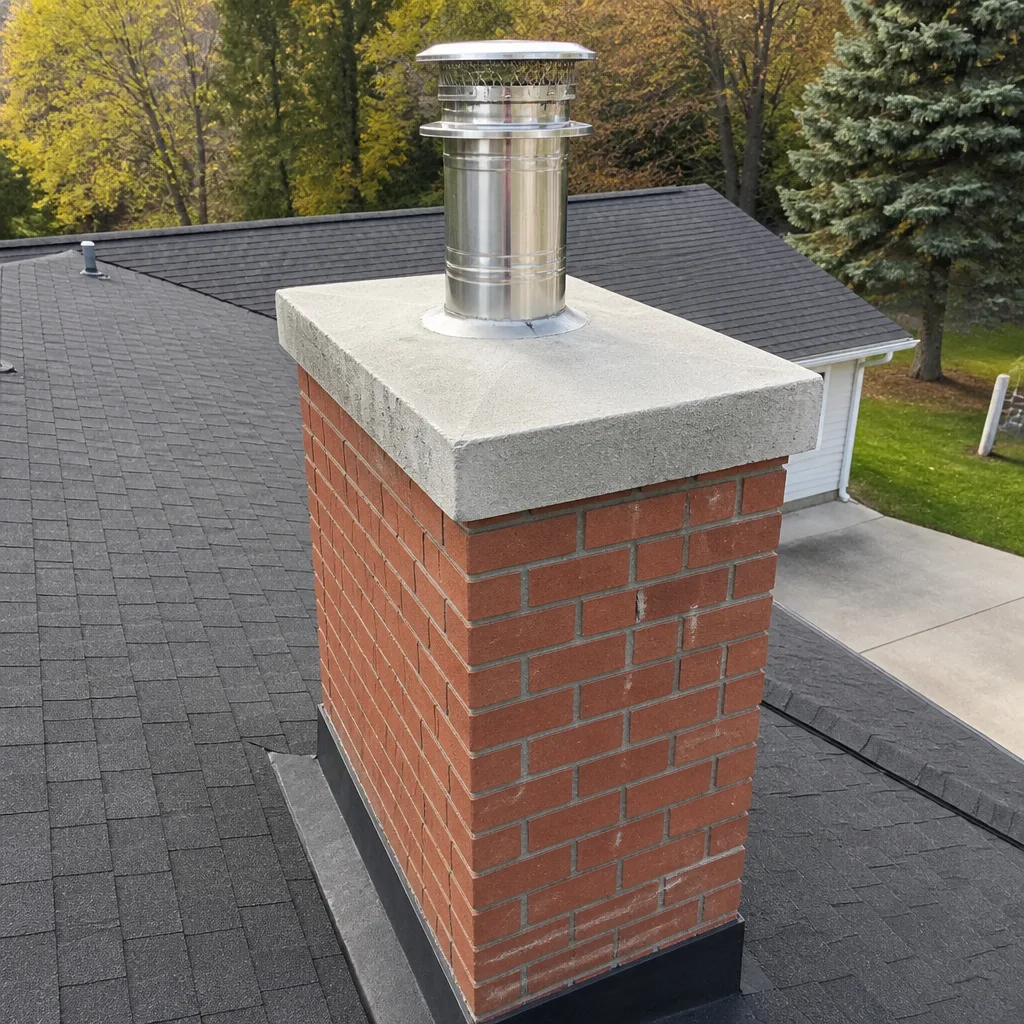 Flue relining
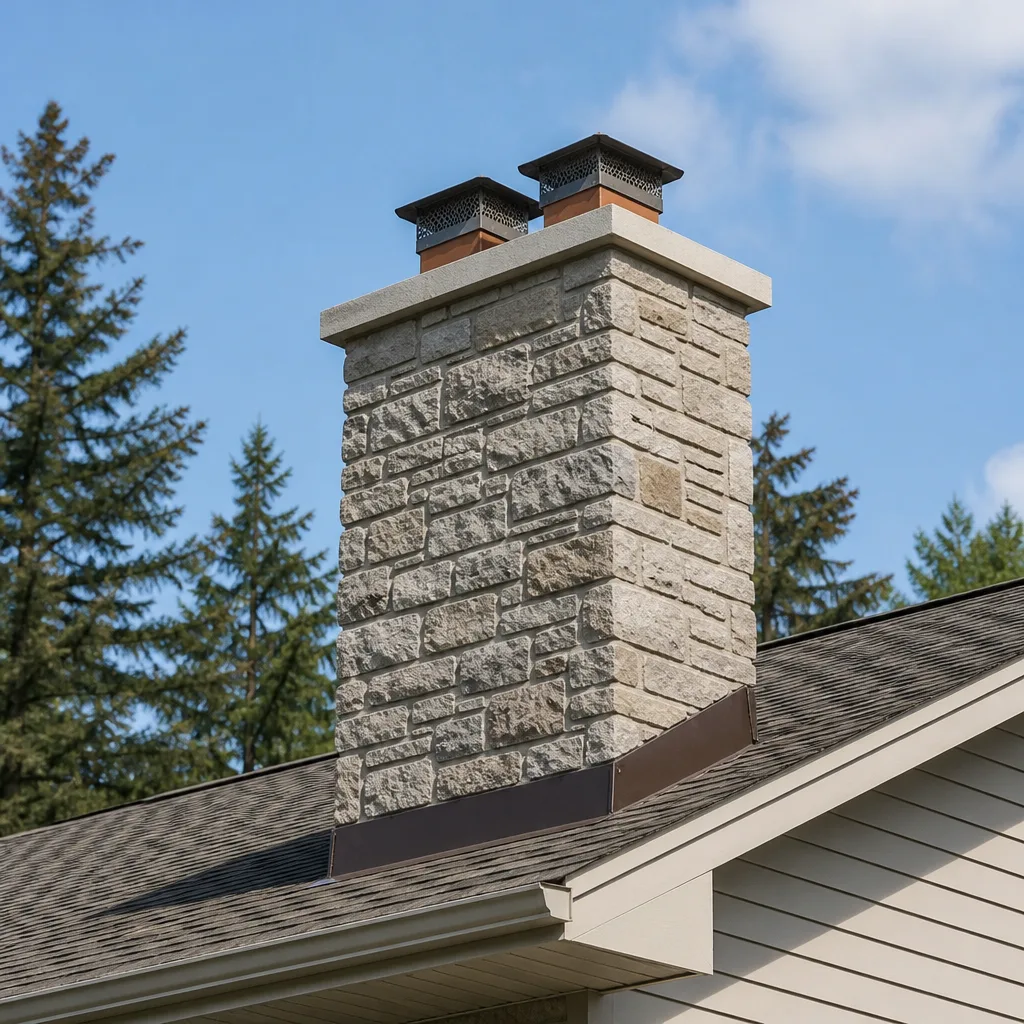 Masonry repair
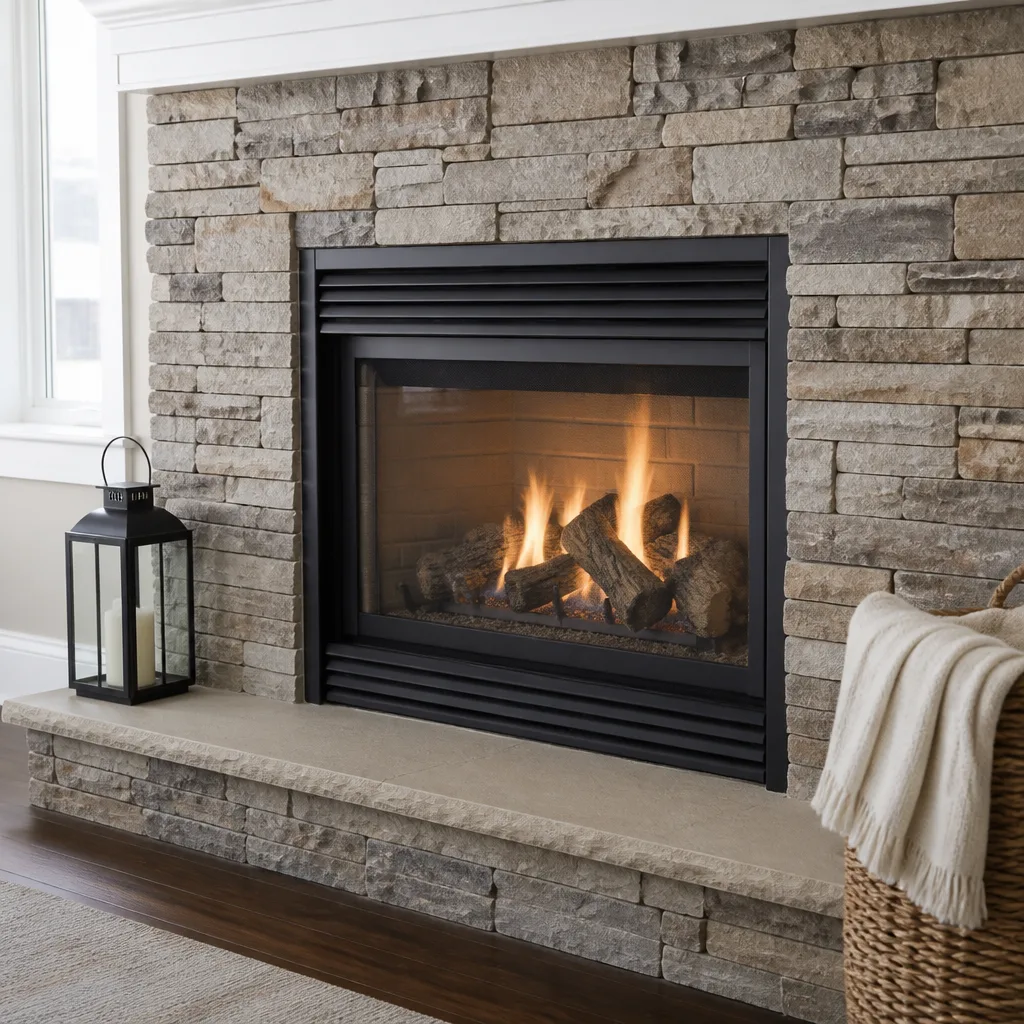 Gas fireplace service
Level 1 sweep and inspection to the NFPA 211 annual standard - flue, crown, cap, and flashing checked and photographed
Chimney sweep logs do not sweep chimneys. They loosen some creosote - which then falls where a brush and vacuum still have to collect it.
How to Hire a Chimney Cleaning Contractor in Universal City: A Step-by-Step Guide
Here’s a statistic most Universal City homeowners never hear: roughly 60% of “chimney sweeps” advertising in the greater Los Angeles market are general contractors, roofers, or pressure-washing companies that added chimney cleaning to their service list within the last three years. They carry a basic brush set, a Shop-Vac, and very little else. The problem isn’t that they’re dishonest. It’s that they’re untrained to spot the specific failure patterns that put homes at risk in southern California’s dry, fire-prone climate. This guide will teach you the exact questions to ask, the credentials that matter, and the red flags that separate a venting specialist from someone who will leave you with a clean-looking flue and a dangerous liner they never inspected.
Quick Answer
The best way to hire a chimney cleaning contractor in Universal City is to require three things before booking: proof of CSIA or NFI certification, written confirmation that the service includes a camera inspection of the flue liner, and a flat-price quote provided in writing before work begins. Skip any contractor who cannot name the product lines they use for repairs or who prices the job over the phone without seeing the chimney. A legitimate sweep in Universal City will document everything with photos and hand you a written report before leaving your property.
Styles & brands we work with
Table of Contents
- The Certifications That Actually Matter
- The Interview Questions That Reveal Everything
- What a Level II Inspection Should Include
- Universal City-Specific Red Flags
- How to Read a Post-Service Report
- What Chimney Cleaning Should Cost in Universal City
- Questions to Ask Before You Write the Check
- Common Mistakes to Avoid
The Certifications That Actually Matter
When you search for a chimney sweep in Universal City, you’ll see a lot of badges on websites. Most of them mean nothing. A “licensed and insured” tagline is the legal baseline for operating any business in California, not a credential. The two designations that actually signal training, recurring education, and adherence to a professional code are CSIA and NFI.
The CSIA, or Chimney Safety Institute of America, is the dominant certification body for chimney sweeps in the United States. A CSIA Certified Chimney Sweep has passed a written exam covering fire codes, clearances, construction standards, and inspection methodology. They’re also required to earn continuing education credits to maintain the designation. Importantly, CSIA certification is not lifetime. A technician who was certified in 2015 and never renewed is not the same as someone whose credential is current. Ask to see the certification number and verify it on the CSIA website. It takes ninety seconds and eliminates a large share of the generalists we mentioned earlier.
The NFI, or National Fireplace Institute, offers three specialist certifications: NFI Woodburning Specialist, NFI Gas Specialist, and NFI Pellet Specialist. These matter because Universal City homes span a wide range of hearth configurations. Older hillside properties have wood-burning masonry fireplaces. Many condos and newer builds use direct-vent gas inserts. A technician with NFI Gas Specialist certification has been tested on venting requirements, gas pressure, and clearance-to-combustibles standards specific to gas appliances. That’s a different body of knowledge than sweeping a traditional masonry flue.
Here’s what these certifications authorize a technician to do in practical terms:
- A CSIA certified sweep can perform Level I and Level II inspections, identify code violations, document structural and clearance issues, and clean the full length of the flue using professional equipment.
- An NFI Woodburning Specialist can assess whether your fireplace and chimney configuration meets the manufacturer’s specifications and current fire code for wood-burning operation.
- An NFI Gas Specialist can verify that your gas log set or insert is venting correctly through the existing chimney and that the termination cap, connector, and liner are appropriate for gas exhaust.
- Neither certification, by itself, qualifies someone to repair a damaged liner. Liner repair and resurfacing requires specific product training. We’ll get to why that matters in a moment.
One more credential worth knowing: F.I.R.E. Certified Inspector. This designation from the Fireplace Investigation, Research, and Education service focuses on forensic inspection of fireplace and chimney systems. It’s overkill for a routine cleaning, but if you’ve had a chimney fire or a failed home inspection, a F.I.R.E. certified professional brings an investigative skill set most sweeps don’t have.
The Interview Questions That Reveal Everything
You can learn more from five minutes of questions than from an hour of reading reviews. Here are the specific questions to ask any chimney contractor before you book a cleaning in Universal City:
- “What product lines do you use for liner repairs?” A professional sweep works with recognized chimney supply brands like DuraFlex, Copperfield, or Olympia Chimney. These are trade-level product lines sold through professional distributors, not big-box retailers. A contractor who hesitates, says “uh, whatever the supply house carries,” or can’t name a manufacturer is likely buying commodity parts from a hardware store and adapting them on the fly. That’s not a materials decision you want made inside your flue.
- “Do you carry HeatShield or an equivalent resurfacing system, or do you refer liner repairs out?” This is the question that separates sweep-and-leave operators from full-service venting companies. Many sweeps will clean your chimney, tell you the liner needs repair, and hand you a referral to someone else. That’s not inherently wrong. But it tells you what their ceiling is. A company that applies HeatShield resurfacing or installs DuraFlex liner systems can handle the repair themselves, which means one point of accountability from inspection to completion.
- “Walk me through what you do on a standard cleaning.” Listen for specifics. A real sweep will describe the process: removing the chimney cap or damper, setting up drop cloths, running a properly sized brush through the full flue length, vacuuming with a HEPA-filtered unit designed for fine particulate (not a standard Shop-Vac), and then inspecting. A generalist will say something vague like “we clean it out real good and make sure it’s safe.” The difference in detail tells you the difference in training.
- “What do you do if you find damage during the cleaning?” The answer you want: “We document it with photos, show you the footage, tell you whether it’s urgent or can wait, and quote the repair separately with no pressure.” The answer that should concern you: “We can fix that same day for an extra fee.” Any significant liner repair quoted without a camera inspection and a written scope of work is a guess being sold as a solution.
- “Will I get a written report and photos?” The correct answer is yes. A professional chimney cleaning in Universal City should generate before-and-after documentation, a written condition report, and photos or video of any findings. If the contractor says they don’t provide reports or doesn’t understand why you’d want one, that’s a service built on speed, not assessment.
These questions aren’t meant to be adversarial. A trained sweep likes these questions because they get to demonstrate competence. A generalist gets uncomfortable quickly. That discomfort is information.
What a Level II Inspection Should Include
If you’ve lived in your Universal City home for more than a few years, had a chimney fire, changed fuel types (wood to gas, for example), experienced the Northridge quake era retrofits on your hillside street, or you’re buying a house with an existing fireplace, you need more than a standard cleaning. You need a Level II inspection. Here’s the problem: many contractors use “inspection” loosely and deliver nothing beyond what a visual glance accomplishes. A legitimate Level II inspection is a defined procedure with specific deliverables.
A proper Level II inspection includes, at minimum:
- A full-length camera scan of the flue interior, from firebox to termination cap, with the footage saved and provided to you
- Assessment of the flue liner material, condition, and any cracks, gaps, spalling, or separation between clay tile sections
- Verification of proper clearances to combustibles in the attic and chase areas wherever accessible
- External inspection of the chimney crown, cap, brickwork, and flashing from the roof
- Confirmation that the damper operates correctly and seals to manufacturer or code standard
- Written documentation of findings with photos and a specific repair recommendation, if needed
Here’s what a “cleaning special” inspection usually is: the technician looks up the flue with a flashlight from the firebox, glances at the chimney from the ground, and writes “flue appears intact” on a form with no photos. That is not an inspection. It’s a glance. In Universal City’s climate, where the wet-dry cycle of coastal fog and Santa Ana heat expands and contracts masonry continuously, small liner cracks that a flashlight misses become structural failures over repeated burn seasons. A camera scan is non-negotiable for any inspection you’re paying for.
Universal City-Specific Red Flags
The LA-area contractor market has patterns you should know. These are the red flags we see most often when Universal City homeowners show us quotes from other companies:
The Vague Phone Quote
A contractor who prices a cleaning over the phone without seeing the chimney is guessing. A two-story hillside home with a 25-foot flue and a steep tile roof is not the same job as a single-story condo with direct roof access. Any price given before a site visit is a marketing number, not a bid. Expect a range on the phone, with a firm price only after the technician sees the chimney and confirms access.
No Written Scope of Work
Every legitimate chimney service in Universal City should produce a written scope of work, even for a standard cleaning. It should list the services to be performed, the flat price, any additional work recommended with pricing, and the conditions of the service. If the contractor is unwilling to write this down, find someone who will.
No Insurance Certificate
“Fully insured” on a website is a sentence. A certificate of insurance you can verify is evidence. Request it. Any professional contractor with legitimate general liability and workers’ compensation coverage will provide it without hesitation. This matters particularly on Universal City hillside properties, where roof access often means working from a steep pitch with fall risks. The last person you want on your roof is an uninsured generalist.
The Upsell Tornado
Here’s a scenario we hear constantly: a homeowner books a $99 cleaning special, the technician arrives, and within thirty minutes there’s a recommendation for $4,000 of liner repair, a $600 cap replacement, and a $350 damper upgrade. The technician can’t show camera footage of the damage, can’t explain what would happen if the work is deferred, and all quotes expire “if we don’t do it today.” A professional will show you the problem, explain the urgency level honestly, provide written pricing, and give you time to decide. High-pressure closes are the opposite of professional assessment.
The Missing Report
When the job is done, you should receive something in writing that documents what was cleaned, what was found, and what is recommended. A receipt with a scribbled note is not a report. A proper condition report includes photos, measurements (flue length, interior dimension), liner material, creosote level, and specific recommendations with priority levels. If the technician leaves your Universal City property without giving you anything, you’ve paid for labor, not accountability.
How to Read a Post-Service Report
Once the service is complete and you have the report in hand, you need to know what actually matters. Here’s how to read the document without a technical background.
Creosote level. The report should classify creosote buildup as Level 1 (light powdery soot), Level 2 (flaky or lightly glazed), or Level 3 (tar-like hardened glaze). Level 3 creosote is a fuel hazard and requires chemical treatment or mechanical removal beyond a standard brush sweep. If your report says “heavy buildup” without a level classification, ask for the specific assessment.
Liner condition. The report should state the liner material (clay tile, stainless steel, cast-in-place) and its condition. Look for specific language: “minor spalling between flue tiles 3 and 4” is useful. “Liner shows normal wear” is not. Useful reports describe what’s there and what’s wrong with it, not generalizations.
Clearance language. The report should note whether clearances to combustibles were visible and verified, or whether areas were inaccessible. If your home has a finished attic or a chase that couldn’t be accessed, the report should say so explicitly. “Inspection of the fireplace revealed no hazards” is meaningless if the technician couldn’t see the flue exterior.
Photos. You should receive before-and-after photos of the flue interior, any damage found, and the cap and crown from the roof. A legitimate report is visual evidence, not just written narrative. If there are no photos, ask for them. A camera scan was either done or it wasn’t.
Priority on repairs. Any recommended repair should come with a priority level: immediate safety hazard, recommended before next burn season, monitor over time. This tells you whether the contractor views the recommendation as a genuine safety issue or a revenue opportunity. We’ve told Universal City homeowners that their liner can wait another season more times than we can count, because honesty about deferral is part of professional assessment.
A final note on reports: keep them. Every report you receive creates a documented history of your chimney’s condition over time. When you sell your home, that documentation answers buyer questions about maintenance. When a problem develops, it tells the next contractor what’s changed. A paper trail of professional inspections is one of the least appreciated aspects of responsible fireplace ownership.
What Chimney Cleaning Should Cost in Universal City
We’re going to be direct about pricing because the vagueness around chimney service costs is where most homeowner confusion starts. In the Universal City and greater LA market, a professional chimney sweep with inspection typically runs between $189 and $350 for a standard wood-burning fireplace with accessible roof or chase-top entry. A gas fireplace inspection and cleaning runs between $125 and $225. A Level II camera inspection, which is a distinct and more thorough service, typically adds $100 to $200 depending on chimney height and access. These are market ranges based on what we see from legitimate, credentialed providers in the area. A $79 cleaning special advertised on a flyer is below the cost of doing the job correctly.
Here’s a realistic breakdown of what you’re paying for in the Universal City market:
- Standard chimney sweep and Level I inspection: $189 – $350. Includes full flue brushing, firebox cleanup, damper check, cap check, and a written report with photos.
- Gas fireplace service and vent inspection: $125 – $225. Includes glass cleaning, log detailing, burner function check, vent termination check, and gas leak testing at accessible fittings.
- Level II camera inspection (standalone or added to cleaning): $100 – $200. Full-length camera scan, saved footage, written condition assessment, and specific repair recommendations.
- Dryer vent cleaning: $85 – $150. Full-length brushing from both ends, airflow verification, and exterior vent hood assessment. This is part of the same venting ecosystem as your chimney and should be on your maintenance calendar regardless of whether you burn wood.
- Chase cover or cap replacement: $250 – $650 depending on material and roof accessibility. Simple galvanized caps sit at the low end; custom stainless and copper sit at the top.
- Liner repair or relining: $2,500 – $7,000 depending on liner type, chimney height, and installation complexity. This is why the right first inspection matters. A missed liner crack becomes a much larger repair.
These are not hard bids. Every chimney is different, and Universal City’s mix of hillside properties with steep pitches and condo units with multi-floor chases means access alone can shift pricing significantly. What you should take away is this: professional-grade service has a floor, and that floor is not $79. If the price seems too low to cover the time and equipment required to do the job properly, the job is not being done properly.
Here’s what we recommend you ask for. When you get your quote, ask for it as a flat price after the technician has seen the chimney. Ask if the price includes the inspection and the written report. Ask if the camera scan is included or extra. A professional company will tell you all of this without being prompted. A discount operator will avoid specifics. That avoidance is your cue.
A Contractor You Can Trust: What to Look For After the Questions
You’ve asked the certification questions. You’ve discussed product lines. You’ve reviewed the report process. Now, what does a reliable chimney cleaning contractor in Universal City look like from the outside? Here’s a field guide to the attributes that signal a professional operation.
They’re not rushed. A standard chimney sweep on a single fireplace takes 45 to 90 minutes. If a technician is in and out in 20 minutes, the flue was not cleaned properly. If they try to schedule four jobs per hour, they’re not inspecting anything. Professional chimney service is methodical because it has to be. Soot is insidious; it gets into carpet, furniture, and heating ducts if equipment and containment aren’t right. The technician should lay drop cloths, use a HEPA vacuum, and work carefully. Rushed means corners cut.
They’ll tell you what’s okay and what isn’t, without an agenda. We’ve done inspections where the flue is in excellent shape and we tell the homeowner exactly that: nothing needed, see you in a year or two. A professional gives you the honest condition assessment because the repeat business comes from trust, not fabricated repairs. If a contractor always finds something expensive, that’s a pattern to take seriously.
They can explain the why behind any recommendation. When a sweep recommends work, they should be able to show you the evidence. A photo of a cracked flue tile. A gap in mortar joints. Water staining at the firebox. The recommendation should follow from the evidence, not precede it. If the explanation is “trust me, it needs to be done,” that’s not expertise, it’s salesmanship.
They’re comfortable with questions. A professional contractor wants you to understand what you’re paying for. They’ll take the time to explain how the damper works, why creosote builds up faster in humid coastal air, and what the camera scan shows. A generalist wants to finish and move on. Curiosity should be welcomed, not tolerated.
Common Mistakes to Avoid
- Booking solely on price. The cheapest chimney sweep in Universal City is cheap for a reason. The economics of a $69 service don’t support HEPA filtration, camera equipment, insurance, or a certified technician. You’re paying for that gap somehow, usually in skipped inspection work you never see.
- Assuming a home inspector already checked the chimney. A general home inspection typically includes a visual glance at the firebox and maybe a look at the cap from the ground. It does not include a camera scan of the flue interior. If you bought your home with a standard inspection only, you’ve never had a flue assessment.
- Not asking about the inspection separately from the cleaning. “Inspection included” means different things to different companies. For some, it’s a full Level I assessment with photos. For others, it’s a checkbox on a form. Ask what the inspection specifically covers before you book.
- Deferring a recommended repair because the fireplace still works. A cracked liner doesn’t stop your fireplace from lighting. It stops your chimney from containing fire and combustion gases, and it gets worse with every burn cycle. “It works fine” and “it’s safe” are different statements. A professional can tell you which one applies.
- Hiring a different contractor for chimney and dryer vent work. Your fireplace flue and your dryer vent are both venting systems, and they share a common failure mode: undetected buildup creating a fire hazard. Using one company for both means one inspection standard, one report format, and one point of accountability. This is exactly why we offer Chimney Sweep in Universal City and Dryer Vent Cleaning in Universal City under the same roof. We’re trained to see the whole venting picture.
- Ignoring the cap and crown. The chimney cap and crown sit on your roof in direct sun, rain, and wind year-round. Cracks in the crown let water into the masonry, which accelerates liner and brick deterioration. A proper inspection includes the exterior components, not just the flue interior. If your sweep never mentions the cap, ask about it.
See the difference
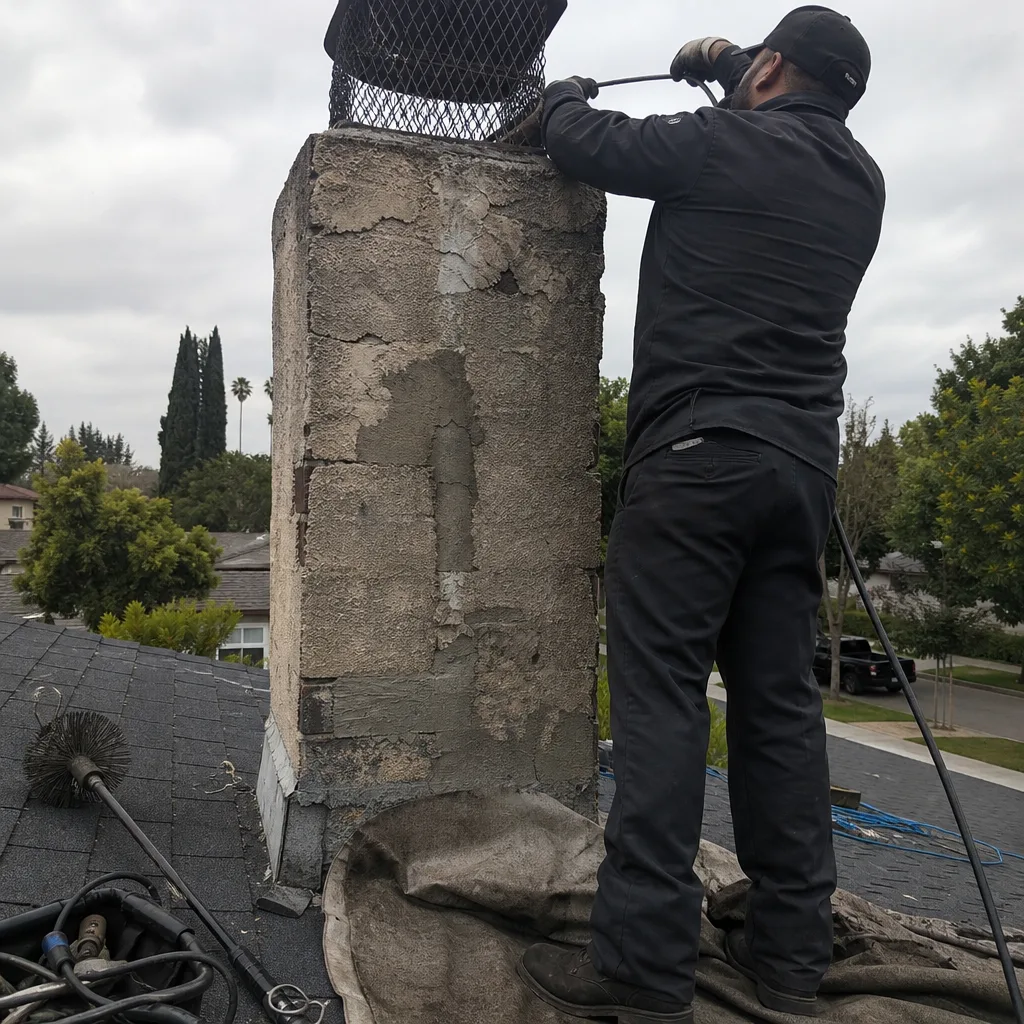 Before
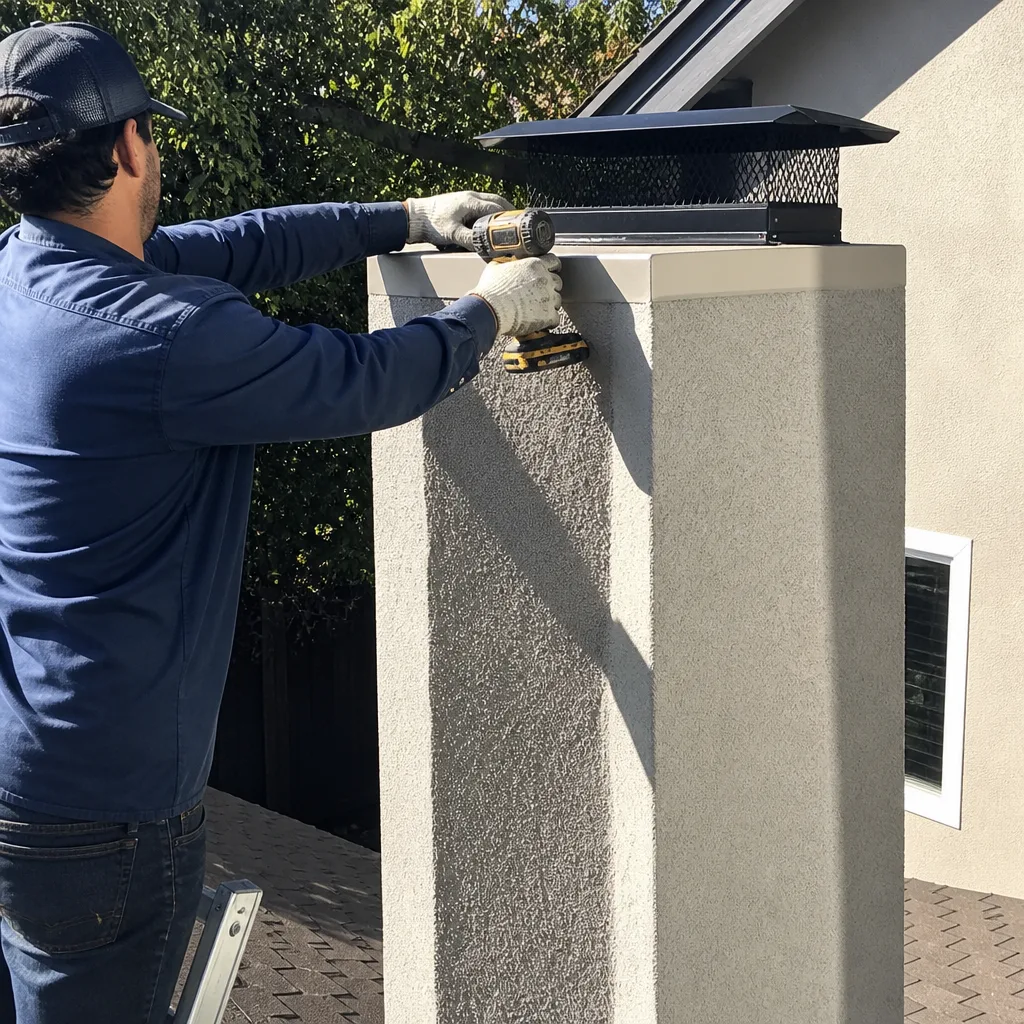 After
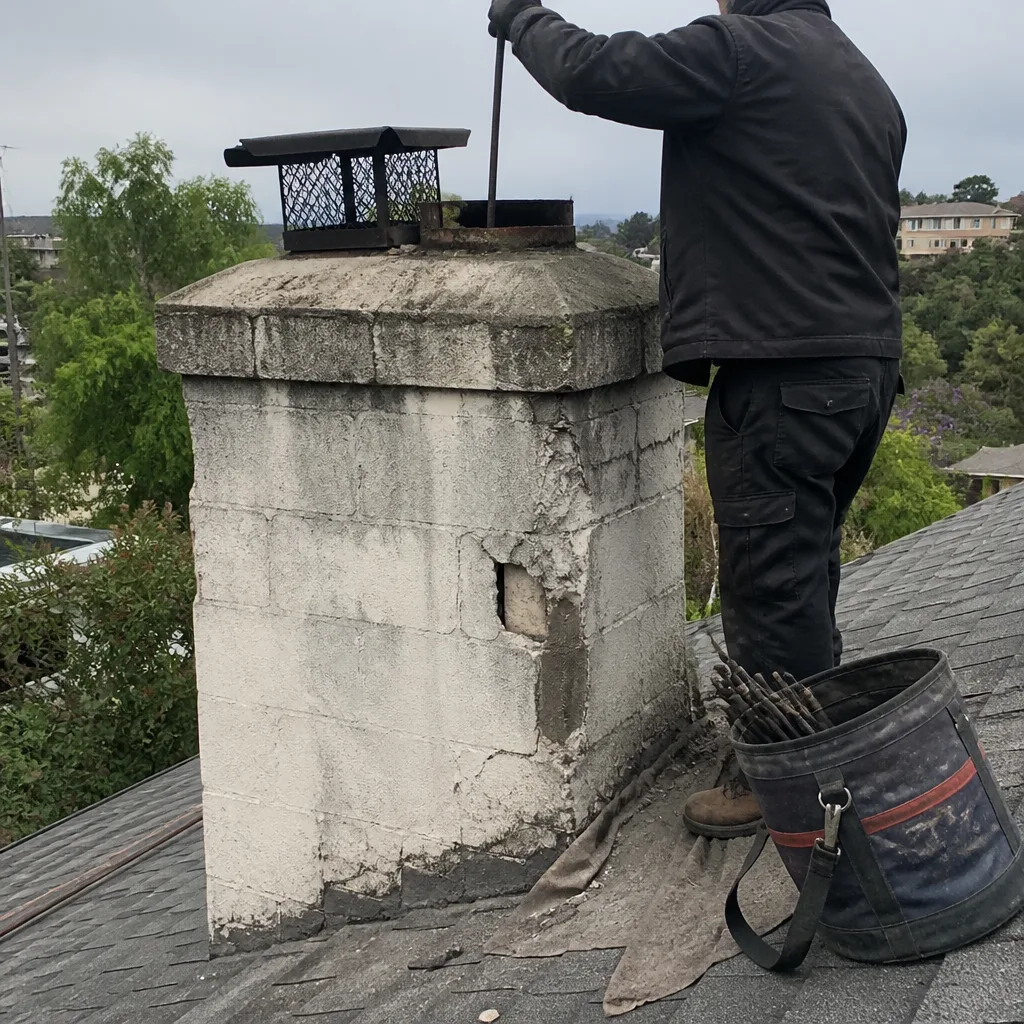 Before
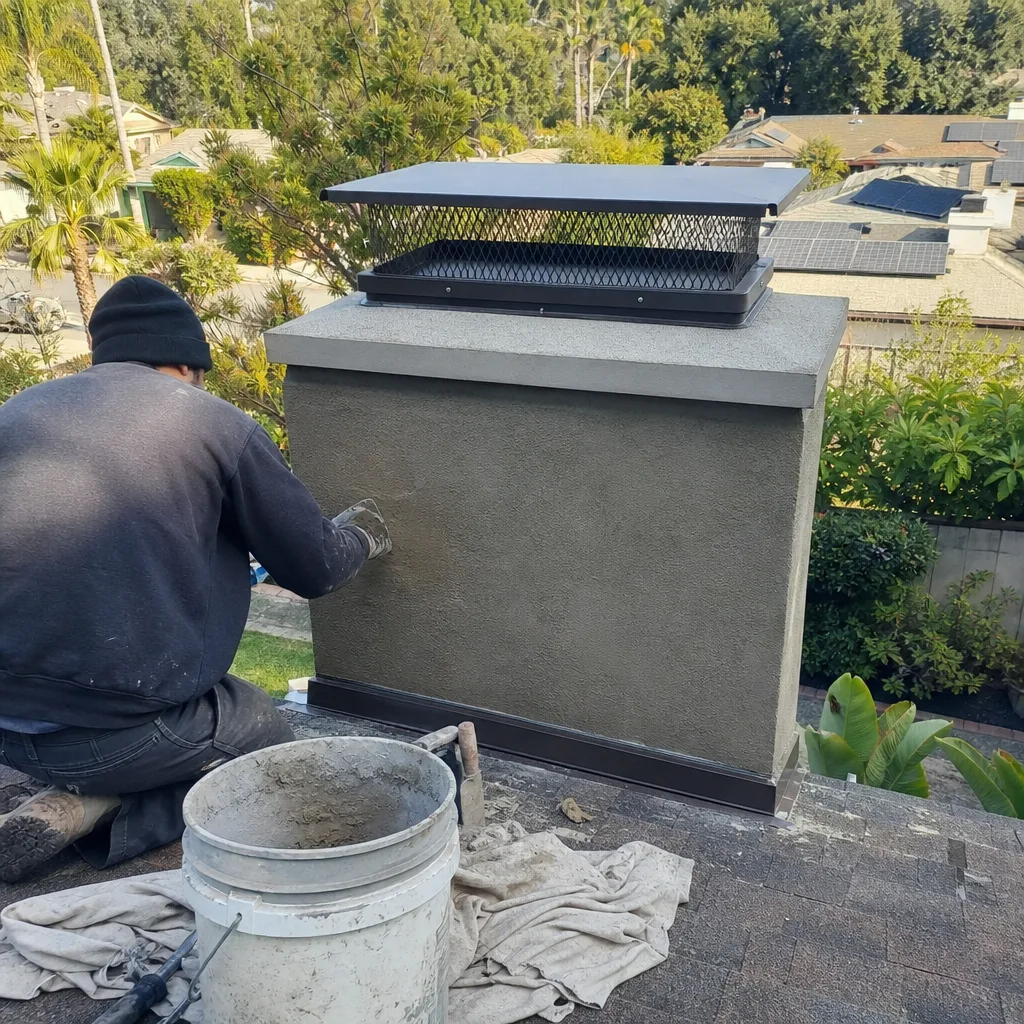 After
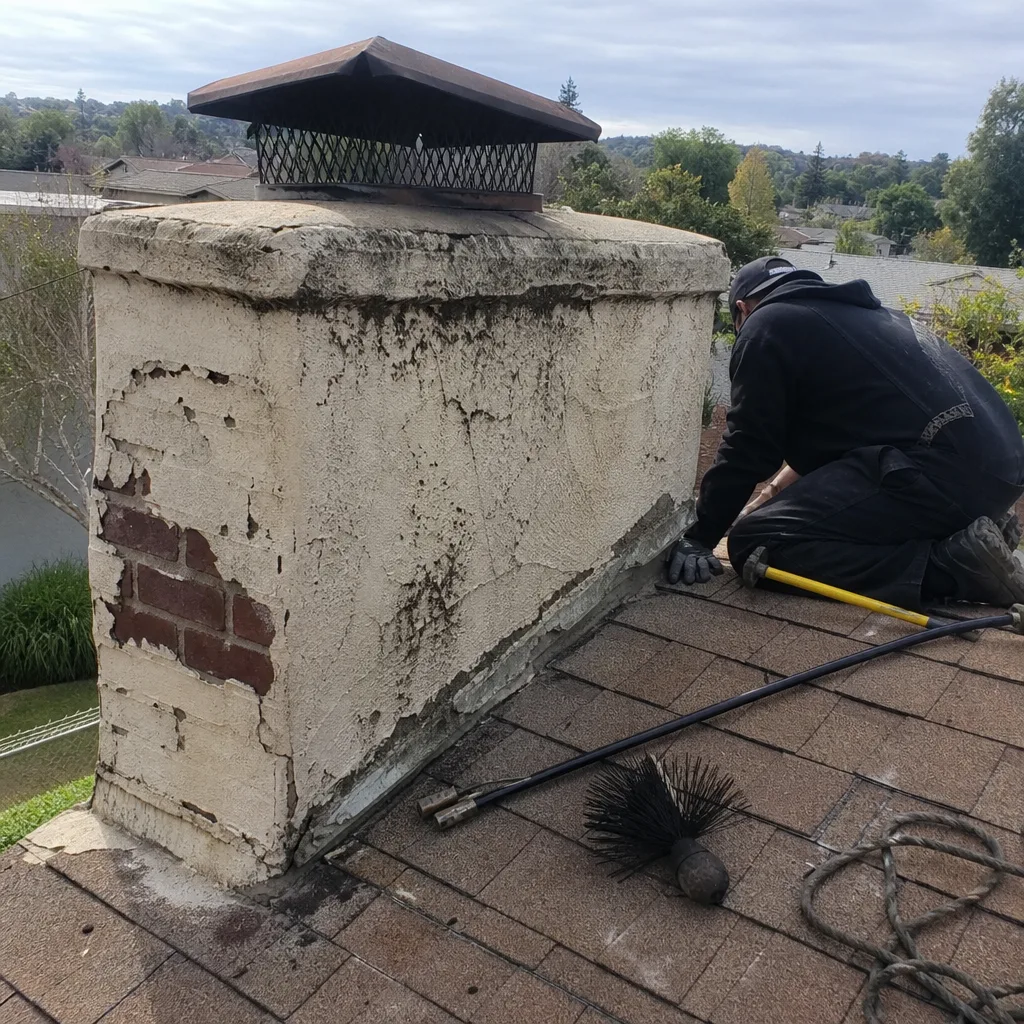 Before
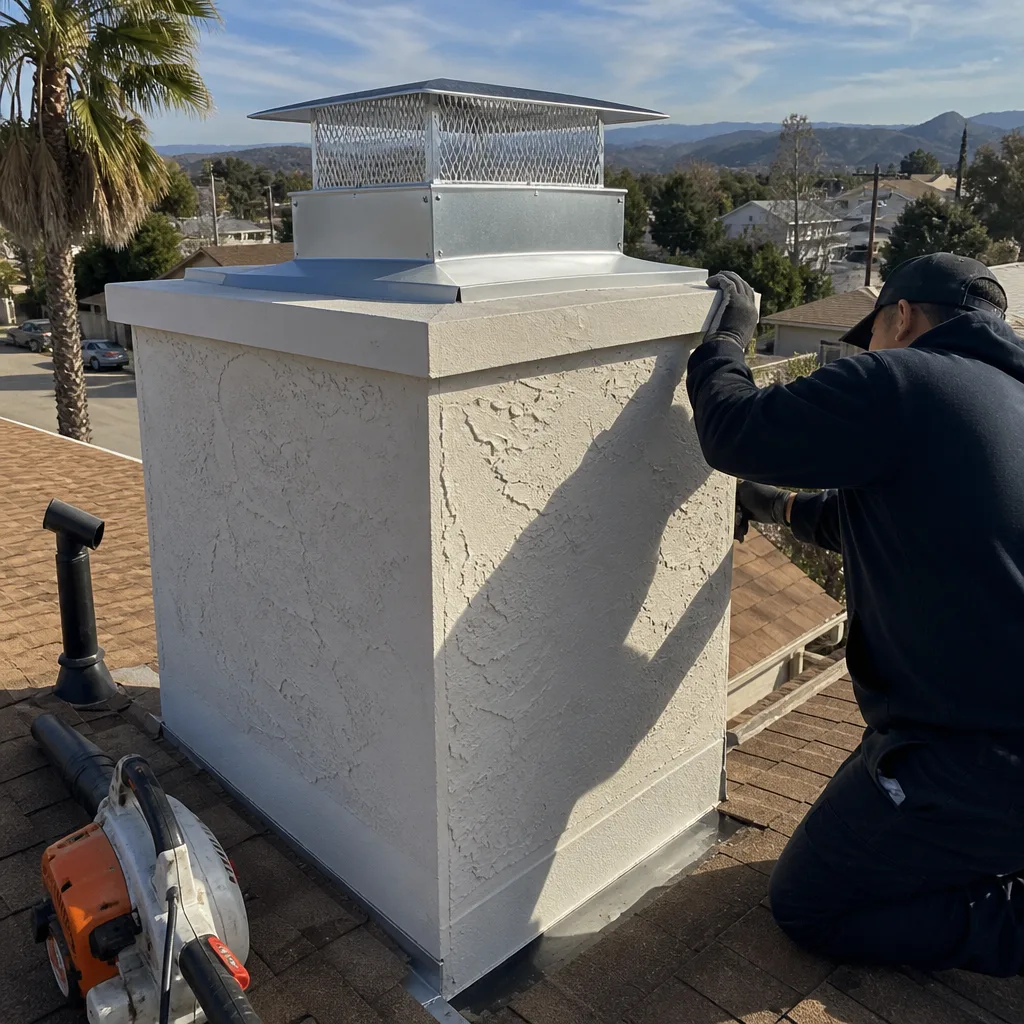 After
When to Call a Professional
If your fireplace has been used more than 20 times since the last cleaning, schedule a sweep. If you smell smoke in the house when the fireplace is burning, that’s a draw or a backdraft problem and it needs professional assessment before further use. If you’ve had a chimney fire, even a small one that you contained quickly, the chimney requires a Level II inspection before the next burn. If you’re buying a home in Universal City with an existing fireplace, include a professional inspection in your due diligence, because the standard home inspection almost certainly didn’t look inside the flue. If your dryer takes two cycles to dry a load or you see lint collecting at the exterior vent hood, that’s a venting restriction and it’s a fire hazard. There’s no DIY shortcut for any of these. The tools required (proper flue brushes, HEPA vacuum, camera system, roof access equipment) and the safety risk involved make this work a job for a trained technician. Causeway Chimney Sweep home offers free estimates in Universal City. Call (877) 500-2276 to schedule.
Frequently Asked Questions
A standard chimney sweep and Level I inspection in Universal City typically runs between $189 and $350 for a wood-burning fireplace, with gas fireplace service between $125 and $225. A Level II camera inspection adds $100 to $200. The final price depends on chimney height, roof access, and the condition of the system. Call (877) 500-2276 for an exact quote for your specific chimney.
For wood-burning fireplaces used regularly during the winter season, an annual sweep is the safe standard. Homes that burn unseasoned wood or use the fireplace more than twice a week during burn season may need a mid-season sweep. Gas fireplaces should be inspected annually but may only need cleaning every two to three years. Universal City’s humid coastal air accelerates creosote formation when combined with the temperature swings of Santa Ana events, so stick to the annual schedule.
Yes. CSIA certification confirms that a technician has passed a rigorous exam on fire codes, clearances, inspection methodology, and chimney science, and that they maintain continuing education credits. It doesn’t guarantee honesty, but it eliminates the majority of untrained generalists selling chimney services. Always ask for the certification number and verify it against the CSIA database before booking.
For an annual cleaning on a chimney with a known history and no recent changes, a Level I visual inspection may be sufficient. But if the chimney is new to you, if you’ve had a fire, if you’ve changed fuel types, or if it’s been more than two years since the last professional look inside the flue, a camera inspection is the only way to see liner cracks, gaps, and hidden damage. A camera scan is the cheapest insurance against a $5,000 relining job you never saw coming.
Chimney sweeping is the removal of creosote, soot, and debris from the flue system. Chimney repair covers structural issues: cracked liners, damaged caps and crowns, deteriorated mortar joints, broken dampers, and water intrusion. Some companies only sweep and refer repairs out. Others, like Chimney Repair in Universal City at Causeway Chimney Sweep, handle both. When one company does both, you’re avoiding the middleman problem of a sweep finding damage and handing you to a third party they can’t vouch for.
A skipped year means creosote builds up, particularly in Universal City’s coastal humidity. Two or three skipped years means the glaze hardens and becomes a fuel load that a standard brush can’t remove. Five or more skipped years puts you at risk for chimney fire, and the heat from that fire is what cracks clay tile liners. Once the liner is compromised, the repair cost jumps from a few hundred dollars for a sweep to several thousand for relining or resurfacing. The scheduled maintenance is always cheaper than the repair it prevents.
The Bottom Line
Hiring a chimney cleaning contractor in Universal City comes down to evidence, not claims. Ask for certification numbers. Ask about the product lines they use for repairs. Require a camera inspection and a written report with photos. Verify insurance. Walk away from vague phone pricing and no-scope-of-work bids. A fireplace is a fire containment system built into the structure of your home, and in Universal City’s climate, the consequences of a missed liner crack are not theoretical. The right contractor will show you the condition of your chimney, the evidence for any recommendation, and the documentation to back it up. If they can’t do those things, they’re not the contractor for the job. Chimney Repair in Universal City is one of the services we handle in-house, along with sweeping and Dryer Vent Cleaning in Universal City. If you’re ready for an inspection that actually shows you something, call Causeway Chimney Sweep at (877) 500-2276 for a free estimate.
Written by the team at Causeway Chimney Sweep, serving Universal City since 2015.