Last updated October 31, 2026
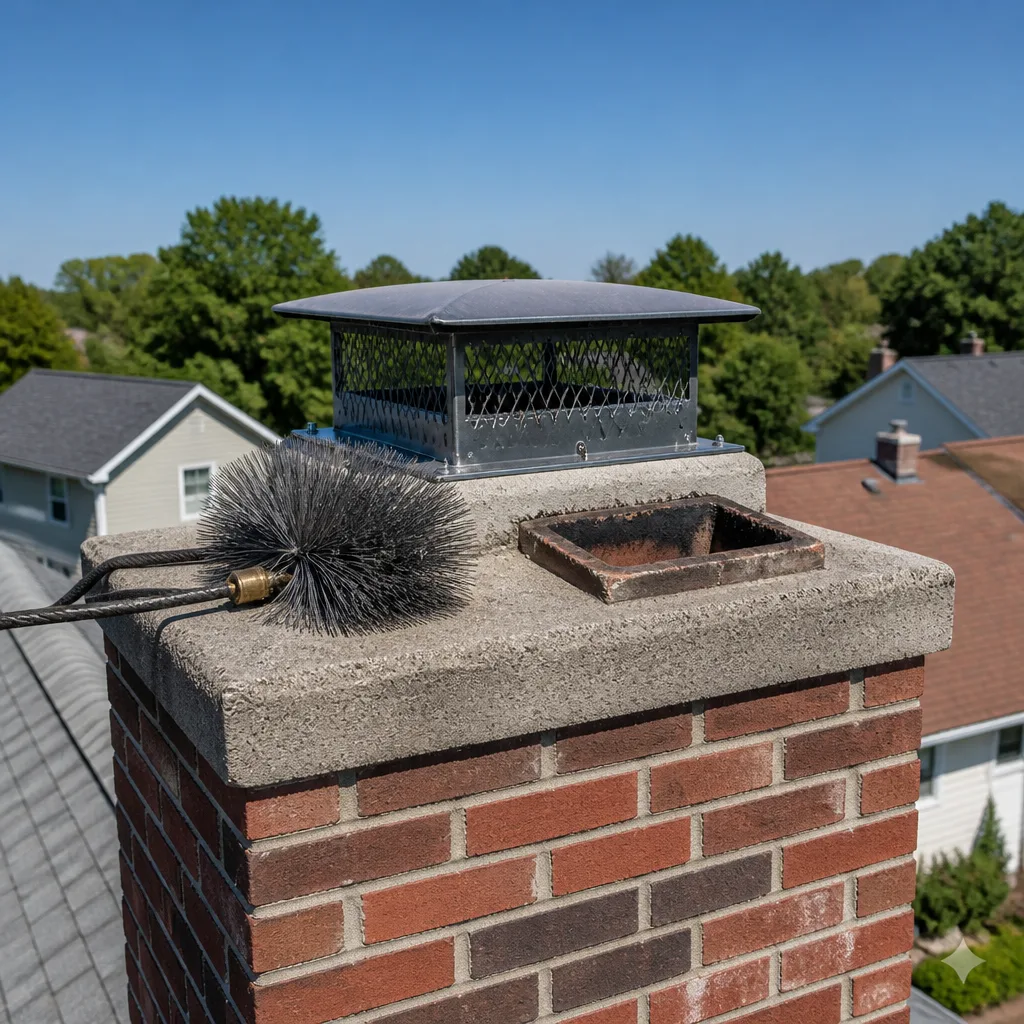 Sweep & inspection
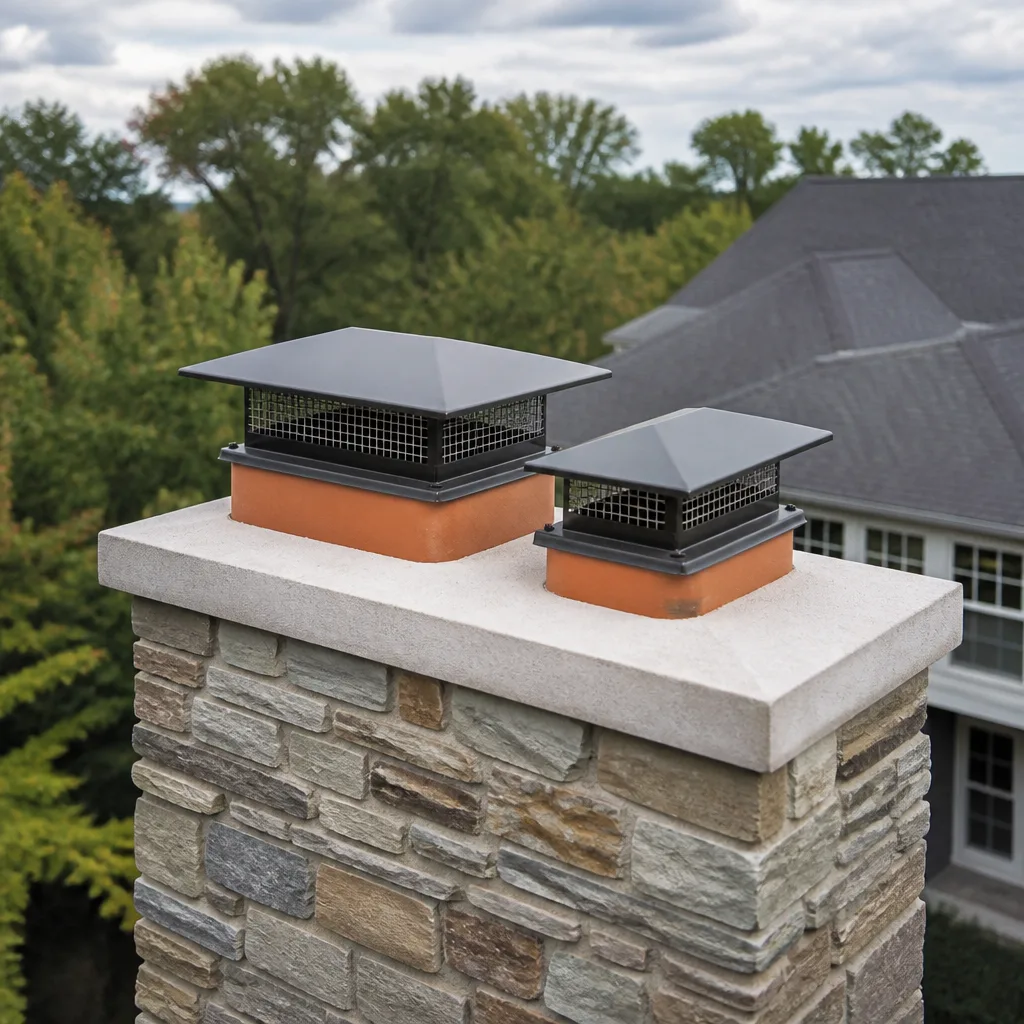 Caps & crowns
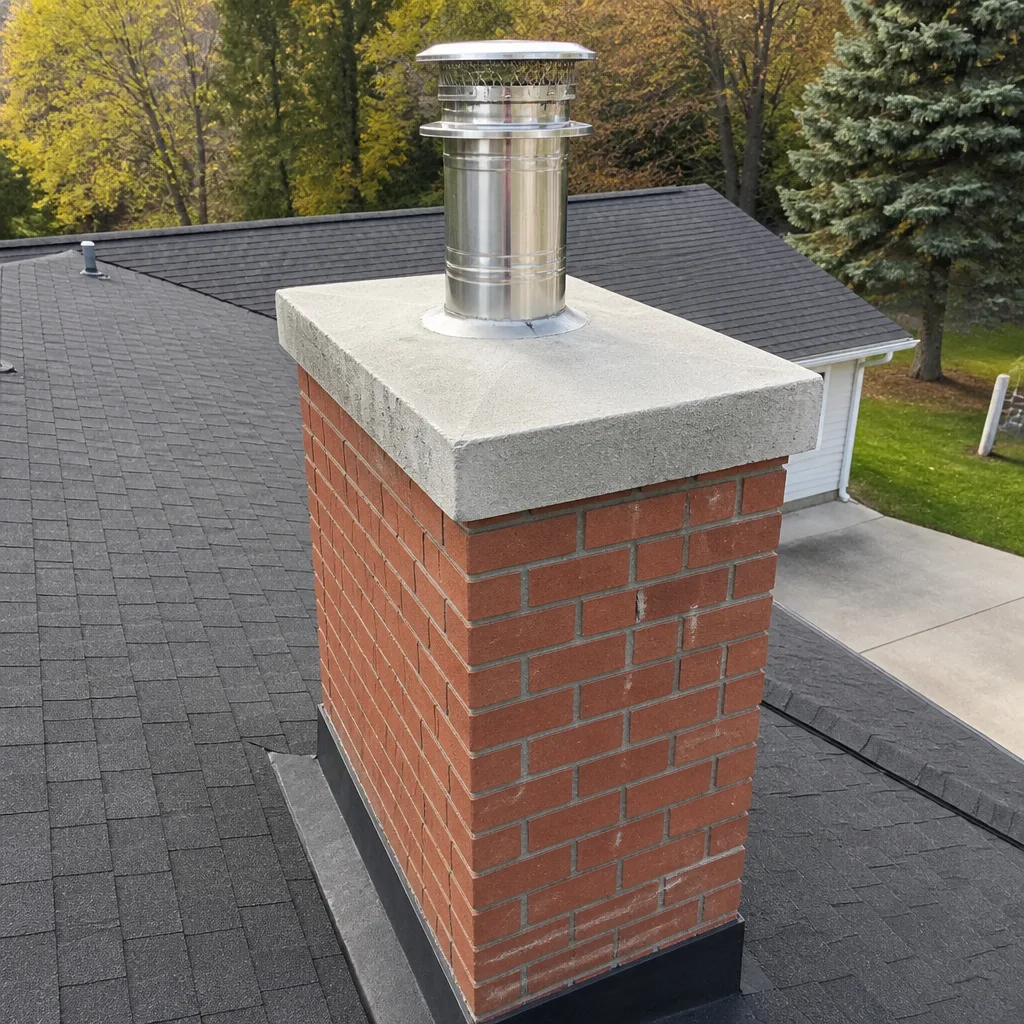 Flue relining
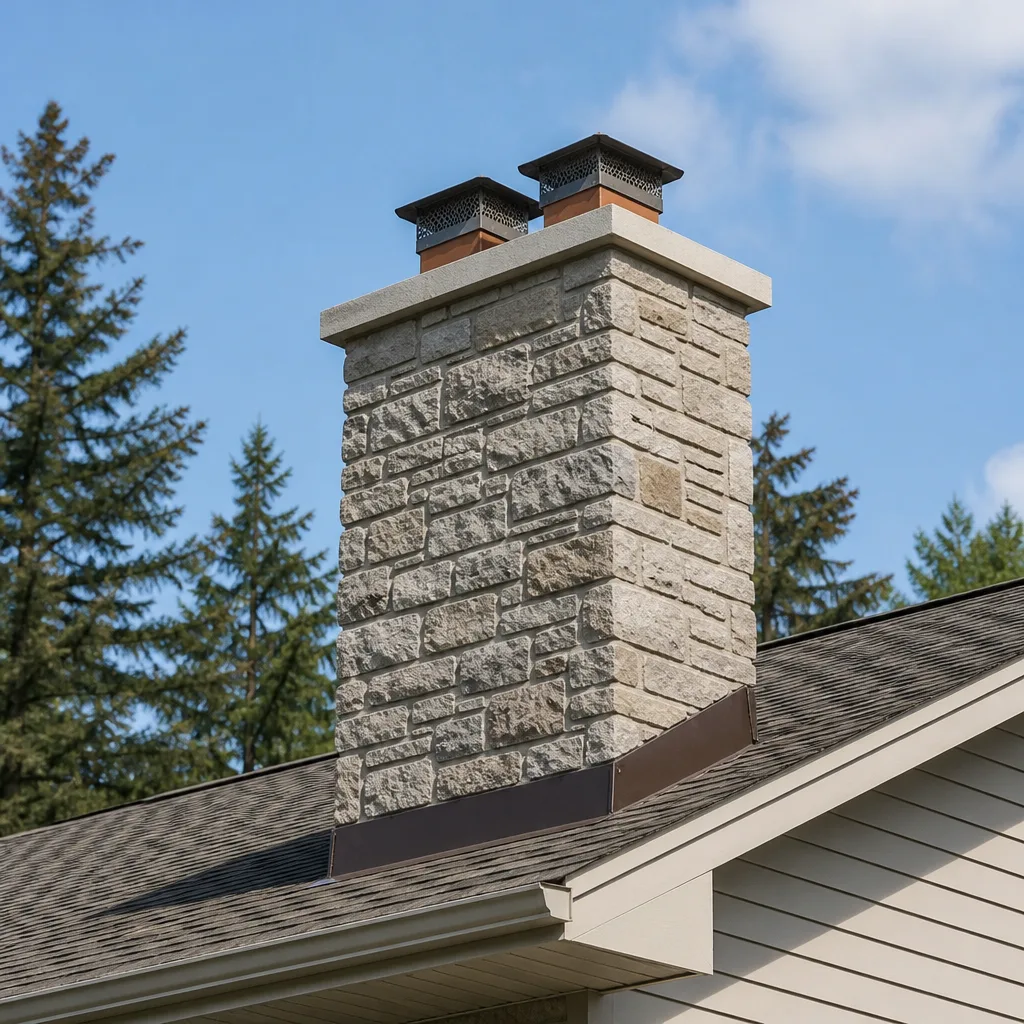 Masonry repair
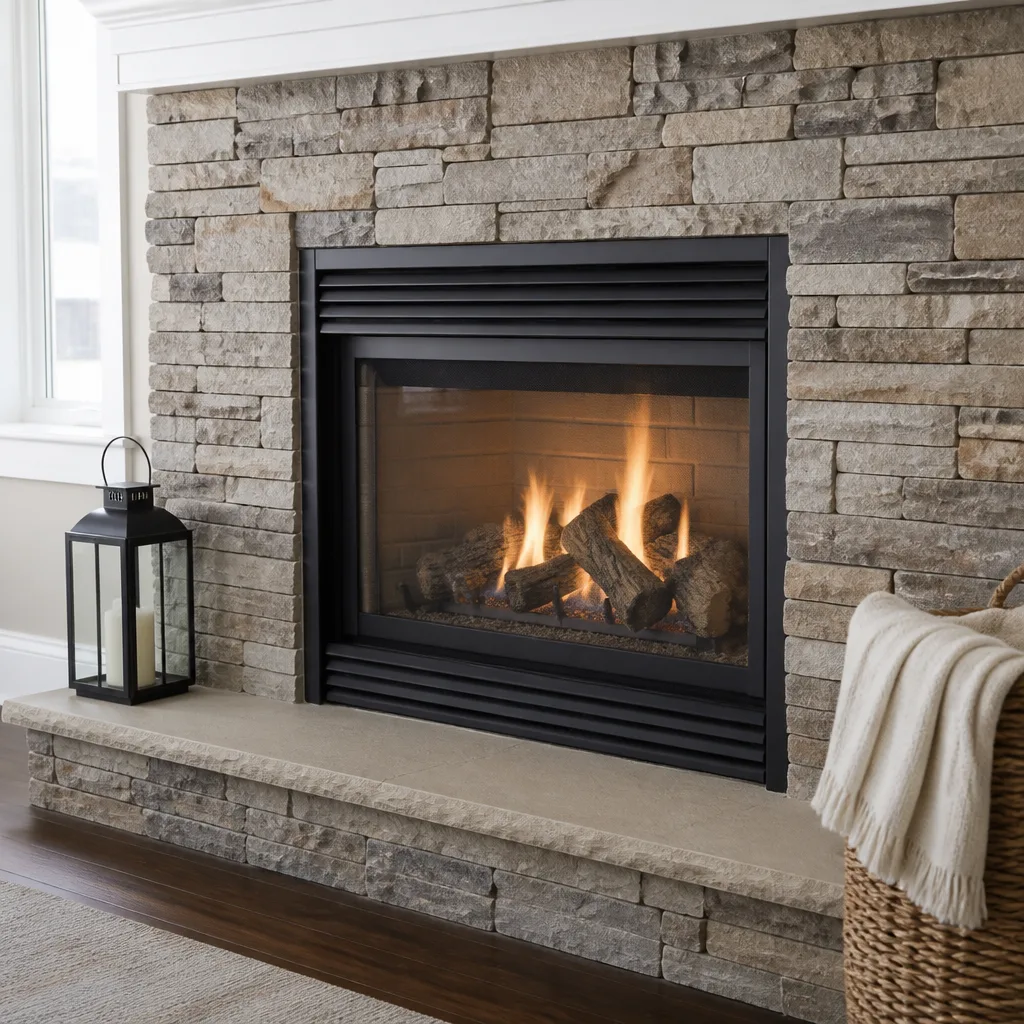 Gas fireplace service
Level 1 sweep and inspection to the NFPA 211 annual standard - flue, crown, cap, and flashing checked and photographed
Chimney sweep logs do not sweep chimneys. They loosen some creosote - which then falls where a brush and vacuum still have to collect it.
Chimney Cleaning Warning Signs: A Universal City Homeowner’s Reference Guide
Here’s something most Universal City homeowners don’t realize until it’s too late: your chimney talks long before it fails. The problem is that most people don’t speak the language. A faint gray haze on the glass doors, a cold draft when the fire’s out, a white crust forming on the exterior brick, a fire that suddenly needs more kindling to catch. Taken alone, each seems like nothing. Together, they’re a diagnostic map pointing to exactly what’s happening inside your flue, and more importantly, what it’s going to cost if you keep ignoring it. This guide and our Chimney Sweep Troubleshooting: Common Problems and How to Fix Them exist because in our experience, the homeowners who call us early spend hundreds. The ones who wait spend thousands.
Quick Answer
The most common chimney cleaning warning signs in Universal City are a strong creosote or campfire odor inside the home, visible dark brown or black glaze on the firebox walls, smoke entering the room instead of drawing up the flue, and a fire that burns lazy or struggles to catch. Any of these means the flue is restricting airflow, creosote has reached a combustible thickness, or combustion gases are not venting properly. If you notice even one, get a professional inspection before the next burn.
Styles & brands we work with
Table of Contents
- Exterior Masonry Warning Signs: Reading the Brick
- Crown and Cap Warning Signs: The Water Intrusion Zone
- Firebox Warning Signs: Refractory Panels vs. Joint Mortar
- Odor Warning Signs: The Three Smells Homeowners Confuse
- Draft and Backdraft Warning Signs: When Air Flows Wrong
- Gas Insert and Zero-Clearance Warning Signs: The Other Chimney Type
- Flue Liner Warning Signs: The Interior You Never See
Exterior Masonry Warning Signs: Reading the Brick
Most Universal City homeowners look at the exterior of their chimney and see just another part of the house. We look at it and see a moisture transport system. Because that’s what masonry actually is: porous clay brick and mortar that absorbs water from every rain, fog cycle, and sprinkler overspray, then releases it through evaporation. When that cycle is working, your chimney stays dry and stable for decades. When it isn’t, the signs appear. And they’re almost always misunderstood.
The one we see most often in Universal City is efflorescence. It’s that white, chalky stain that blooms across the brick face, and here’s the thing: efflorescence is not cosmetic. It’s dissolved mineral salt being carried to the surface by water moving through the masonry. Every time you see it, water has already penetrated the brick, traveled through the wall, and evaporated. That water is now inside your chimney system, working on your mortar joints from the inside, freezing and thawing through mild winter nights, and slowly compromising the structural integrity of the flue itself. Painting over it does nothing. The stain comes back within a season because the moisture source hasn’t been addressed.
Other exterior signs will tell you more about what’s happening inside:
- Spalling brick – brick faces that are flaking, crumbling, or popping off in sheets. This is freeze-thaw damage. Water gets in, expands, and breaks the brick from the inside out. Universal City’s mild climate means this happens slowly, but it happens.
- Deteriorating mortar joints – if you can scrape mortar out with a screwdriver, the joint has lost its binding strength. Water is getting in through the gaps.
- Dark staining in vertical lines – this isn’t soot, it’s usually water tracking down from a failed crown or cracked cap and wicking through the brick. The dark color is algae or simply prolonged saturation.
- Brick displacement or bulging – if you see a section of chimney that’s shifted, even slightly, that’s a structural warning. The chimney’s own weight is now stressing a compromised section.
Here’s what we want Universal City homeowners to understand: masonry damage and flue damage are the same problem in different locations. Water that rots your exterior brick is also dripping down the inside of your flue, where it dissolves creosote into an acidic compound that attacks the clay liner. When we recommend repair with HeatShield resurfacing, it’s usually because water intrusion has already done interior damage that cleaning alone won’t fix. Get the exterior looked at before it gets to that point.
Crown and Cap Warning Signs: The Water Intrusion Zone
The crown is the concrete slab that sits on top of your chimney, the cap is the metal or stone lid above it. Together they’re your chimney’s roof, and they take more weather abuse than any other component. In Universal City, the crown’s biggest enemies are slow and patient: sun-baked cracking, rain saturation, and the occasional hard downpour during wet winters. A cracked crown doesn’t announce itself. It just starts letting water into places water was never supposed to be.
When we inspect a chimney in Universal City, the crown is one of the first things we check, because crown failure is behind roughly a third of the flue damage we find on repair calls. Here’s what a failing crown looks like from the ground, and what you should be looking for before you ever call us:
- Visible cracks wider than a credit card – hairline cracks will become wide cracks. Once a crack opens enough for water to pool, the erosion compounds quickly.
- Gaps between the crown and the flue liner – this is where water pours in. The crown should be sealed tight against the clay liner with a flexible sealant, and that sealant has a lifespan.
- Missing or spalled crown edges – if the concrete is chipping away at the corners, the crown’s overhang is compromised. A proper crown overhangs the brick by at least two inches to shed water.
- A rusted, tilted, or missing chimney cap – the cap is your first defense against rain going directly down the flue. A missing cap in Universal City’s rainy season is an open pipe to your firebox.
- White efflorescence concentrated at the top third of the chimney – this tells you water is entering near the top, not from ground saturation.
Chimney caps are another item we rarely see in useful condition on older Universal City homes. A good cap with a spark arrestor screen does three things: keeps rain out, keeps animals out, and keeps sparks from leaving the flue. Birds nesting in a chimney are not a random event. They’re looking for a dark, protected opening, and a missing cap is an invitation. Squirrels, raccoons, and birds will all build nests in flues, and a dried nest directly above a firebox is a fire waiting for a hot ember. If you hear scratching or chirping from the chimney, that’s not a clue – that’s the problem announcing itself.
We specify Olympia Chimney caps and crowns on our repair work because the material quality matters, particularly for a component that takes direct weather every single day. A hardware-store cap rusts through in three or four years. A professional-grade cap lasts decades. The difference is in the gauge of the steel and the quality of the screen. We’d rather install something once and forget about it.
Firebox Warning Signs: Refractory Panels vs. Joint Mortar
This is where homeowners lose the most money on bad advice. The firebox is the brick-lined chamber where your fire actually burns, and it’s built to take direct flame. But there are two very different types of damage that happen in a firebox, and getting them confused is expensive. One is mostly cosmetic. The other is a genuine fire containment failure waiting to happen.
Refractory panels are the pre-cast, smooth ceramic boards that line the back and sides of most modern masonry fireboxes. They’re designed to reflect heat and protect the structural brick behind them. Over years of heat cycling, they crack. That’s normal, and to a point, it’s harmless. A cracked refractory panel with a hairline fissure, or even a small chunk missing from the corner, is not an emergency. The firebox wall behind it is still solid. You can keep burning for another season or two before replacing the panel.
Settled joint mortar is different. When the mortar joints between the firebox bricks themselves start crumbling, falling out, or showing gaps deeper than about a quarter inch, the firebox is no longer containing heat and flame the way it was built to. Heat can now reach the wood framing behind the brick, and in an older Universal City home, that framing might be decades old, dry, and waiting. That’s a fire containment failure. Not next year. Now.
Here’s the simple test we walk homeowners through:
- Does the damage look like a cracked plate? Refractory panel cracks are thin, clean lines across a smooth surface. The panel itself shifts slightly when pressed. This is a $200 to $400 parts-and-labor fix, and it can wait a season.
- Does the damage look like crumbling cookie? If you run your finger along a joint and mortar falls out as dust, if gaps between bricks go deeper than your fingertip, if the brick itself is flaking or loose, that’s structural. That needs a pro immediately.
- Is there a rust-colored stain below the firebox? That’s usually water from a failed crown above, carrying dissolved creosote with it. The water problem is above; the stain is just where it ended up.
The myth we hear most often in Universal City is that any firebox crack means the chimney is unsafe. That’s simply not accurate, and it’s why we show homeowners their firebox with a camera during every inspection. You should never be told to replace something you can’t see. We do firebox repair in Universal City using professional materials for one reason: the board at the back of your fireplace is the only thing between a burning fire and the wood structure of your house. It’s not the place to save money.
Odor Warning Signs: The Three Smells Homeowners Confuse
We get a lot of calls from Universal City homeowners that start with, “My chimney smells.” That’s a good instinct. A functional chimney should be completely odor-neutral when it’s not in use. When it smells, the smell has a specific diagnostic meaning, and getting the diagnosis wrong means you fix the wrong problem. Here are the three most common chimney odors we encounter in Universal City, and what each one actually means.
Creosote odor – smells like a cold campfire, asphalt, or a smoky barbecue that’s been sitting too long. This is the most common complaint, and in most cases, it’s a cleaning problem. Creosote builds up as smoke condenses on the flue walls, and when outdoor humidity rises (which happens a lot in Universal City’s coastal-influenced weather), the creosote absorbs moisture and releases that acrid smell into the house. The fix is straightforward: a proper chimney sweep that removes the creosote down to the flue surface, not just the loose debris. We also recommend a Gelco creosote treatment after cleaning because it breaks down the residual pitch that a brush alone doesn’t reach.
Sulfur or rotten-egg odor – this is not a cleaning problem. This is a combustion problem. Sulfur smells mean you’re burning something that isn’t wood, or your draft is so poor that exhaust gases are spilling back into the home. In Universal City, with our high percentage of homes that have gas appliances vented through masonry chimneys, this odor is sometimes the first sign that a gas appliance is not venting properly. Carbon monoxide can be present with no odor at all, but when the sulfur additive in natural gas is detectable, the appliance is producing incomplete combustion. Shut it down and call a specialist. This is not a sweep. This is a venting diagnosis.
Musty, damp, or mildew odor – this one tells you that water is entering the chimney somewhere and the flue interior is staying wet. Musty chimney smell in Universal City is almost always a crown, cap, or flashing problem, and it typically gets worse after rain. The fix isn’t cleaning; it’s finding the water entry point and sealing it. Sometimes the culprit is as simple as a missing cap. Sometimes it’s cracked flashing around the roofline. The point is: don’t keep cleaning a chimney that smells like a basement. Find the water.
Here’s the takeaway we want homeowners to remember: creosote smell means clean me. Sulfur smell means stop using me and inspect the appliance. Musty smell means find the leak. Three very different plans of action.
Draft and Backdraft Warning Signs: When Air Flows Wrong
The physics of a chimney are simple. Warm air rises, pulls smoke with it, and creates a continuous flow of air from the firebox, up the flue, and out the top. When that flow reverses – when air comes back down the chimney instead of going up – you’ve got a backdraft, and it’s one of the most dangerous things a chimney can do.
Universal City sits in a valley with its own air pressure conditions, and we’ve seen backdrafting happen even in properly built chimneys when conditions stack against the draft. A two-story home with competing exhaust fans in the kitchen and bathrooms can depressurize the interior enough that the chimney starts acting like an intake vent instead of an exhaust. Add a tightly weather-sealed house, a cold flue, and a fire that hasn’t warmed the liner yet, and smoke pours into the living room instead of going up.
The signs of draft and backdraft problems are more subtle than a room full of smoke:
- Smoke lingering at the top of the firebox – a healthy draft pulls smoke briskly up and away. If smoke hangs at the lintel, rolls out when you open the doors, or curls into the room at the top of the fireplace opening, the draft is weak or reversed.
- A fire that’s hard to start and slow to catch – this is a common complaint in Universal City. Homeowners blame the wood or the kindling. Often, the flue isn’t drawing, so the fire can’t get the oxygen it needs.
- Cold air pouring from the fireplace on winter nights – even a closed damper lets some air through. A strong cold draft when the fireplace isn’t in use suggests the flue is acting as a fresh-air intake, not an exhaust. It means the damper isn’t sealing, or the chimney has structural openings.
- White steam pulsing from the chimney top – this one’s counterintuitive. A little steam is normal. Steam that pulses in sync with a forced-air furnace running suggests the chimney is backdrafting the furnace’s exhaust back into the house through the chimney, rather than venting it outside.
If you experience any of these, the fix usually isn’t a bigger fire. It’s finding out why the chimney draft in your Universal City home isn’t working. Often the cause is a restriction in the flue: creosote buildup, a bird nest, a collapsed liner section, or the wrong size flue for the appliance it’s venting. Sometimes it’s the house itself: tight construction with no makeup air. Either way, a pro with a draft gauge and a camera can find the answer in under an hour.
Gas Insert and Zero-Clearance Warning Signs: The Other Chimney Type
A big blind spot for Universal City homeowners is assuming that gas fireplaces and inserts don’t need chimney maintenance. The fire is clean, there’s no creosote, so what’s to maintain? The answer: the entire venting system. Gas inserts, zero-clearance fireplaces, and direct-vent stoves move exhaust through a completely different class of venting than masonry flues, and the warning signs for these systems don’t look like conventional chimney problems at all.
Here’s what we look for on gas and zero-clearance units in Universal City, and what you should be looking for at home:
- Blue-green flames turning yellow or orange at the tips – this is incomplete combustion. A properly burning gas fire is predominantly blue. Yellow flame means the air-to-fuel ratio is off, which produces carbon monoxide.
- Sooty black deposits on the logs or glass – again, incomplete combustion. Modern gas logs should burn clean. Black soot means the burner needs adjustment, the venting is partially blocked, or the unit isn’t getting combustion air.
- Condensation or water streaks on the inside of the glass – gas combustion produces moisture. In a properly vented system, that moisture leaves with the exhaust. When moisture condenses inside the unit, exhaust is not moving the way it should.
- A smell of gas when the unit fires or cycles off – a brief whiff at startup is almost normal. A persistent gas smell means the valve or connections need inspection. A sulfur smell mixed with it means exhaust is re-entering the home instead of leaving.
- White crust or corrosion at the vent termination outside – the horizontal termination cap on the exterior wall is a common failure point. Corrosion there is failing metal, and failing metal in a gas vent is a carbon monoxide exposure risk.
Zero-clearance fireplaces in particular fail in a specific way: the refractory panels inside the firebox crack and degrade over time, and the unit loses its ability to contain heat at safe temperatures. You can’t replace these with generic panels from a home center. Zero-clearance units are engineered systems with manufacturer-specified parts, and when the panels fail, the entire unit often needs replacement. We carry Copperfield fireplace products for these applications because they’re built to manufacturer specs, not box-store universal fit.
The universal rule for gas and zero-clearance units is: yours is venting through a chimney, whether it looks like a fireplace or not. The venting needs to be inspected, birds need to be kept out, and the cap needs to be in place. If your gas logs haven’t been checked in five years, they’re overdue.
Flue Liner Warning Signs: The Interior You Never See
The flue liner is the most important component in your entire chimney system, and it’s the one part you will never see from your living room. The liner channels exhaust up the flue, contains combustion heat, and keeps creosote from eating into the chimney’s structural masonry. When the liner fails, the chimney is no longer safe to use, even if everything else looks fine.
For Universal City homeowners with older masonry chimneys, liner damage is the most common hidden problem we find on inspection calls. Clay tile liners crack from thermal stress over years of heating and cooling cycles. Water intrusion accelerates the process. Once cracks open, heat and gases reach the brick and mortar behind the liner, and you’re on borrowed time. The clay tiles that line most mid-century Universal City fireplaces are now 50, 60, 70 years old. They were never designed to last forever.
Here are the warning signs that point to liner damage, even though you can’t see the liner itself:
- Pieces of clay tile visible in the firebox or on the ground outside the chimney – this is the liner literally falling apart. If you find chunks of clay tile in your firebox, the flue has already begun to come down.
- Smoke entering rooms on upper floors when the fireplace is running – a cracked liner allows smoke to escape into wall cavities and find its way out through gaps around windows, electrical outlets, or baseboards upstairs.
- A chimney that drafts fine at first but gets worse as the fire builds – heat is escaping through cracks, cooling the flue, and killing the draft.
- Unexplained soot stains on interior walls near the chimney – smoke is making its way through the wall structure. This is not a normal occurrence and needs immediate attention.
- The age of the home – if your Universal City house was built before 1980, the clay liner is old enough to need professional evaluation.
When we find liner damage that’s localized rather than total, we reach for HeatShield resurfacing. It’s a ceramic coating applied to the inside of the flue that seals cracks and restores the liner to a safe, solid surface without the cost of a full rebuild. It works because it’s applied as a liquid and cures as a continuous ceramic shell, which is a fundamentally different approach from sliding in sectional liners. For more extensive damage, we install DuraFlex stainless steel liners, which completely reline the chimney with a flexible steel flue that carries a real manufacturer’s warranty. The point for homeowners is: liner damage has solutions, and they don’t all mean rebuilding the chimney. But they all require a professional with a camera to see what’s actually happening inside.
Common Mistakes to Avoid
- Painting over efflorescence without addressing the water source. The stain will return because the moisture is still moving through the brick. You’ve bought yourself a season, not a fix.
- Using a chimney sweep log instead of a real cleaning. Sweep logs loosen some surface creosote. They don’t remove glazed creosote, they don’t inspect the liner, and they give a false sense of safety.
- Ignoring a small backdraft because “it only happens sometimes.” Intermittent backdraft is often a restriction that worsens as creosote builds. The time to fix it is the first time you notice it.
- Keeping a gas fireplace running because “it’s clean burning.” Gas appliances produce carbon monoxide, and their venting systems fail just like any other. Annual professional inspection isn’t optional.
- Burning green or wet wood in a Universal City winter. Coastal moisture means unseasoned wood produces more creosote per fire than dry wood. If you must burn softwood, burn it hot and have it swept more often.
- Relying on a home inspector’s chimney report from when you bought the house. That inspection was a visual pass, not a camera inspection. Five years later, the condition is unknown. Get it looked at before you light up a season you assume is covered.
See the difference
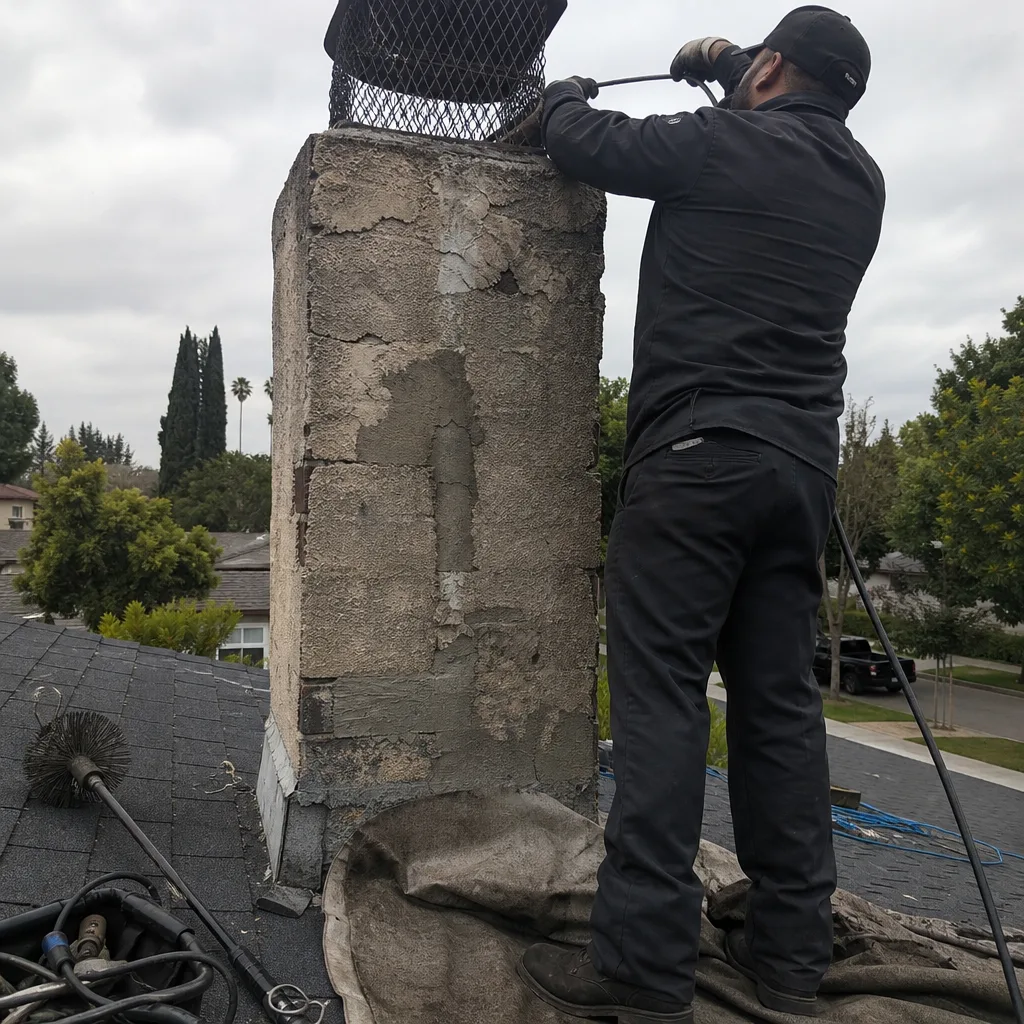 Before
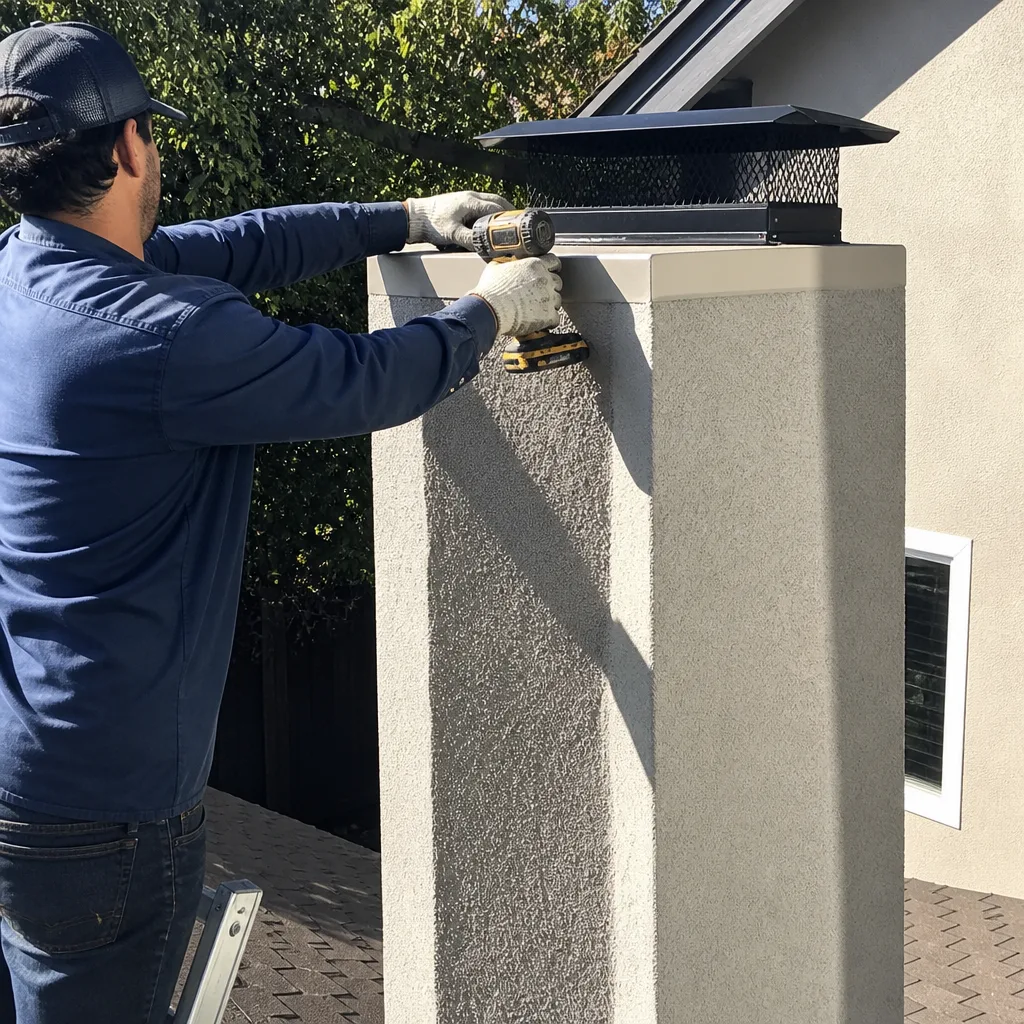 After
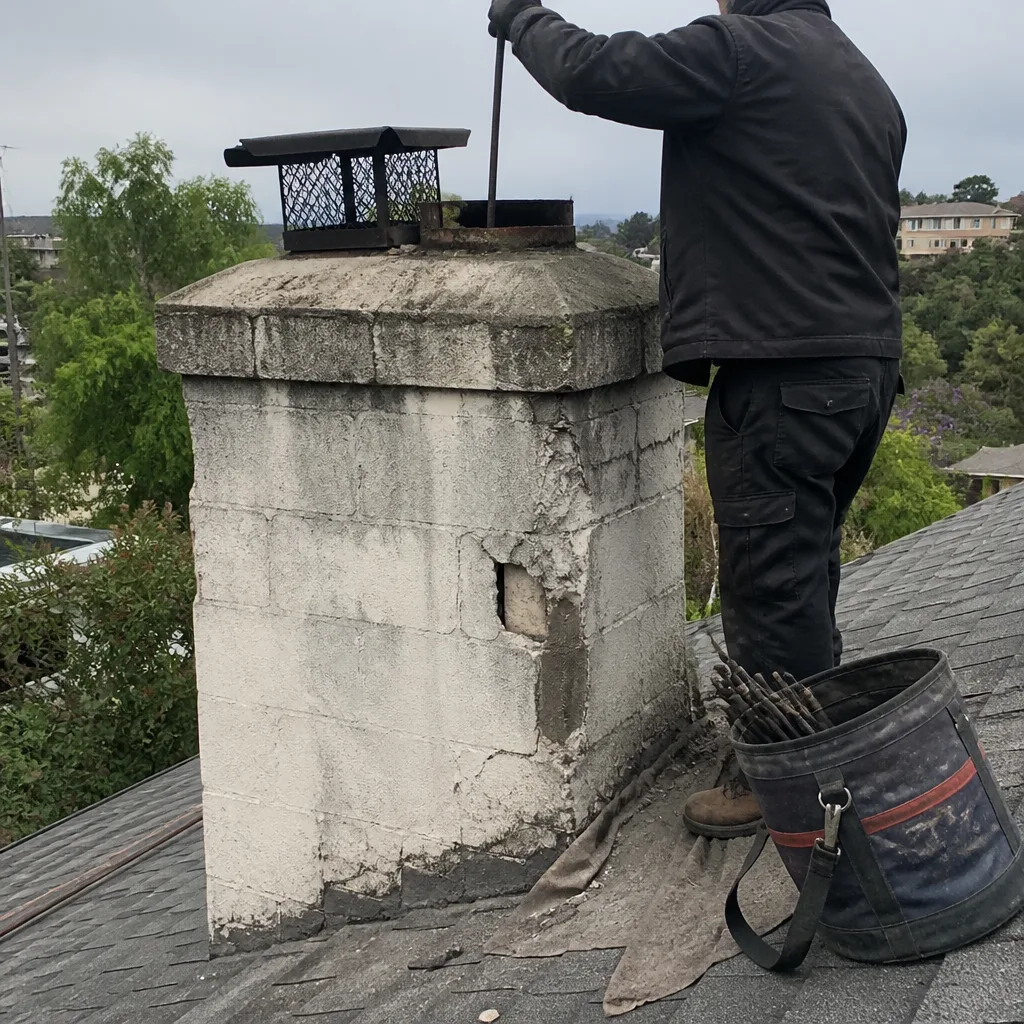 Before
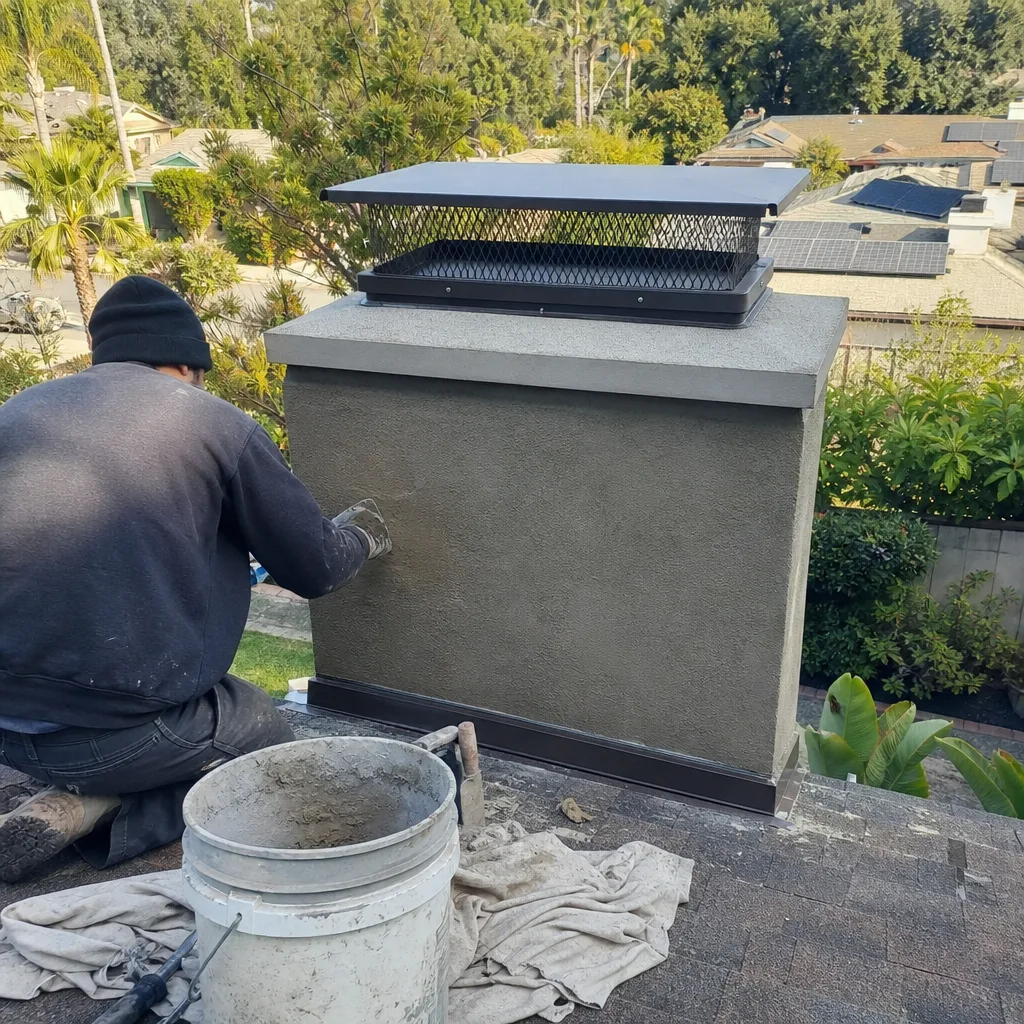 After
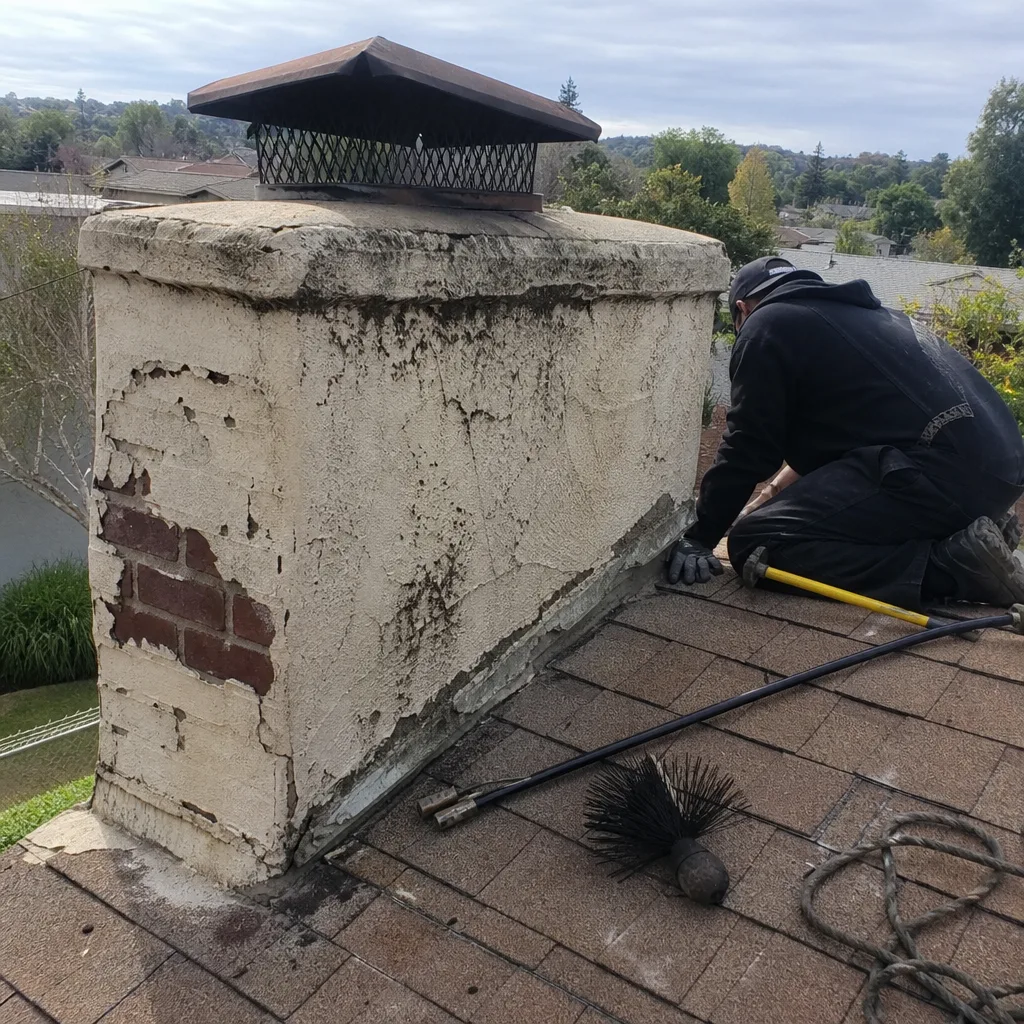 Before
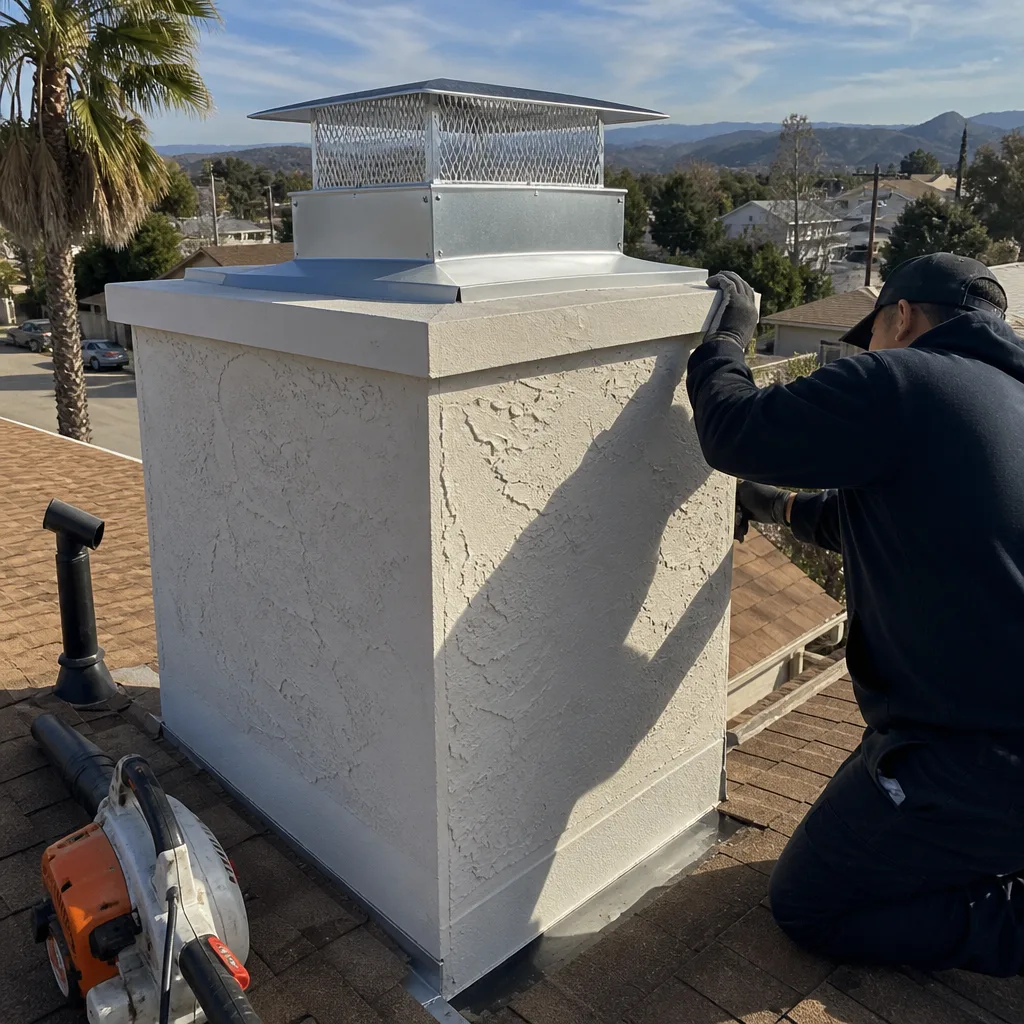 After
When to Call a Professional
If you’ve seen any of the signs in this guide, the responsible move is a professional chimney inspection. Specific situations that warrant a call this week: smoke entering the home while burning, a strong creosote or campfire smell that lingers after the fire’s out, a sulfur smell from a gas appliance, finding clay tile chunks or brick dust in the firebox, a fire that won’t draft at all, or a chimney that’s wet inside after rain. These are not DIY projects. They’re not “keep an eye on it” situations. They’re the chimney telling you, clearly, that something has failed. Causeway Chimney Sweep offers free estimates in Universal City, and we’ll show you what’s happening with a camera before we recommend anything. Call (877) 500-2276 to book an inspection.
Frequently Asked Questions
A standard chimney sweep in Universal City typically runs between $180 and $300, depending on the size of the flue, the type of chimney, and how much creosote has built up. If we find issues that need repair – like a cracked crown or a damaged liner – those are quoted separately after we show you the camera footage, so you’ll know exactly what you’re paying for before any work begins. Call (877) 500-2276 for an exact quote, and the estimate is free.
The National Fire Protection Association recommends a chimney be swept whenever creosote reaches one-eighth of an inch thick, but for most Universal City homeowners who burn wood regularly, that translates to once per season. A gas fireplace that vents through a masonry chimney can go longer between cleanings but should still be professionally inspected every year. If you burn three or more cords a season, you may need a mid-season sweep. The real answer comes from a visual inspection of what’s actually in your flue.
Not all liner damage requires full replacement. If the cracks are isolated and the liner’s structure is still sound, HeatShield resurfacing can seal them and restore the flue’s integrity at a fraction of the cost of a full reline. If the damage is widespread or the liner has begun to collapse, a DuraFlex stainless steel reline is the right long-term fix. The only way to know which category you’re in is a camera inspection – and we’d never ask you to make a repair decision without first showing you what the camera sees.
Creosote keeps building. The flue narrows. Draft gets worse. The fire burns weaker. And the chimney gets closer to the one scenario every sweep in the industry dreads: a creosote fire that ignites inside the flue. That fire can reach temperatures that crack the liner, spread to the roof structure, or find its way into wall cavities. It doesn’t matter if you’ve “never had a problem.” Creosote is a physical accumulation, and it doesn’t care about your track record. If you burn wood, you are building up creosote. The question is whether you’ll remove it before it removes itself. If you’re unsure of your current buildup, call (877) 500-2276 and we’ll take a look.
That’s creosote absorbing moisture from the air and releasing its smoky oils back into your home. The higher the humidity, the stronger the smell. The fix is a proper sweep that removes the creosote down to the flue surface, followed by a treatment that breaks down the residual deposits. In Universal City’s damp winters, this is one of the most common complaints we get. A swept chimney shouldn’t smell, even when it rains for a week.
You can, but you shouldn’t, especially during Universal City’s winter rains. An uncapped chimney is an open tube to the sky. Rain gets in, soaks the flue walls, and turns the creosote acidic. Birds use it for nesting, and a nest directly above a fire is a chimney fire waiting for a spark. Replacing the cap is a small investment compared to repairing the damage that an open flue invites. We install Olympia Chimney caps sized to your specific flue, so rain stays out and the burner stays safe.
The Bottom Line
Your chimney is a system, not a hole in the roof. Every warning sign is a signal from that system about something specific: efflorescence means water intrusion, creosote odor means cleaning, sulfur means combustion, musty means moisture, and backdraft means ventilation. Learn to read the signals and you’ll know when to act before the problem gets expensive. Ignore them, and the fix will always be bigger later. The homeowners in Universal City who call us early are the ones who spend the least. If you’ve noticed any of the signs in this guide, explore more guides & resources, then schedule a camera inspection with a professional who will show you exactly what’s going on. That’s what we do, and the estimate is free.
Written by the team at Causeway Chimney Sweep, serving Universal City since 2015. We handle chimney sweeping, chimney repair, and dryer vent cleaning in Universal City – one call, full system. Call (877) 500-2276 to book your inspection.