DuraFlex Chimney Sweep in Universal City: A Homeowner’s Guide
DuraFlex is a flexible stainless steel chimney liner system used to reline masonry chimneys without tearing out the original structure. In Universal City, where most homes predate 1980, a DuraFlex liner is often the difference between a fireplace you can use safely and one that should stay dormant. If you’d rather not sort through liner specs yourself, call (877) 500-2276 and we’ll tell you exactly what’s inside your flue and what it actually needs.
What DuraFlex Actually Is (And Why Your Contractor Might Not Name It)
DuraFlex is a brand name for a UL-listed flexible stainless steel chimney liner system. It’s made from an alloy designed to handle the acidic byproducts of gas and oil combustion, and it’s the product line we specify when relining a chimney for a gas appliance vent or a wood-burning fireplace converted to gas. The key word there is “specified.” A flexible liner is not a universal product category where all versions perform the same. The alloy grade, wall thickness, and UL listing status determine whether the liner survives fifteen years or starts pitting at the seams in three.
Here’s what we mean by materials literacy. If a chimney contractor hands you a quote that says “flexible liner system” without naming the product, ask them to. A DuraFlex liner carries a specific UL 1777 listing, meaning it’s been tested and listed for use as a chimney liner. A generic import flex pipe sold at a hardware store is often not listed for that application at all. The price difference reflects that. We pulled a so-called liner out of a mid-century home near Universal City’s hillside streets last fall where the homeowner had paid a handyman to “reline” the chimney with what was essentially aluminum dryer vent. It had corroded through in two seasons. That’s the cost of not naming the product.
In Universal City’s housing stock, most chimneys are original to the home. Clay tile liners from the 1950s and 1960s crack under decades of thermal cycling and seismic settling. When that happens, the chimney still looks fine from outside. Inside, flue gases are escaping into the masonry cavity, and carbon monoxide can find its way back into the house. A DuraFlex liner solves that by creating a new, continuous, insulated passage inside the existing flue, without removing the original chimney. That’s the retrofit advantage: the outside of your home doesn’t change, and the inside becomes a code-compliant vent again.
Why Universal City’s Older Homes Are Prime Candidates for a DuraFlex Retrofit
Universal City sits on the edge of the Hollywood Hills, and the housing stock reflects a building boom from roughly the 1940s through the 1970s. Those homes were built with masonry fireplaces and clay tile flue liners because that’s what the code required at the time. Clay tile works, but it has a finite life. Decades of wood fires, the occasional chimney fire, and the subtle movement of hillside foundations all contribute to cracking. Once a clay liner is compromised, the path to repair is either full demolition or a reline.
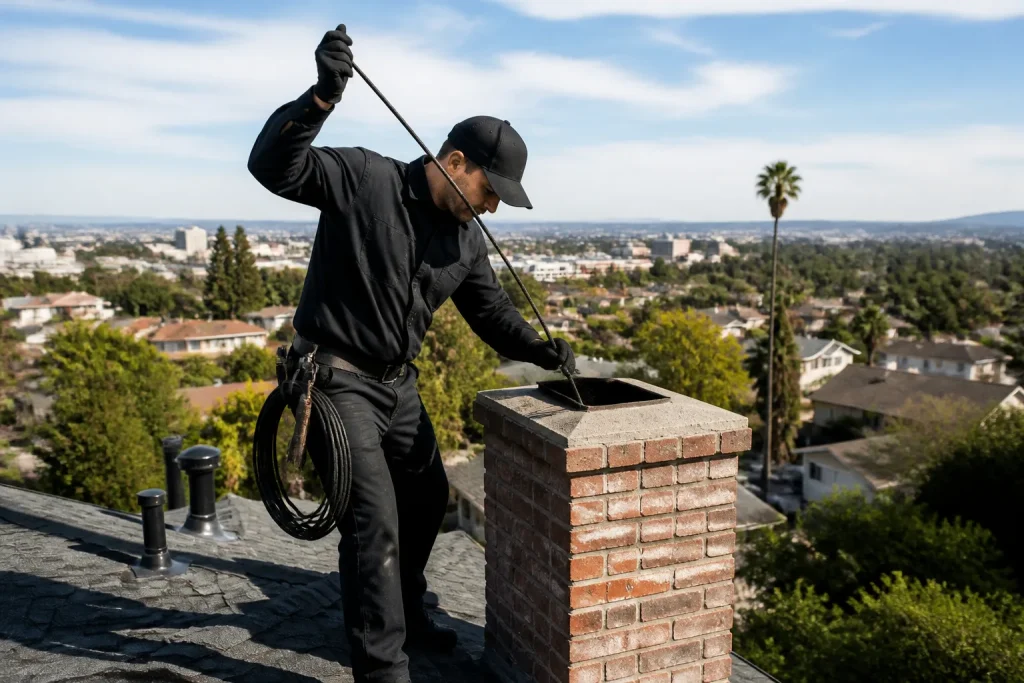
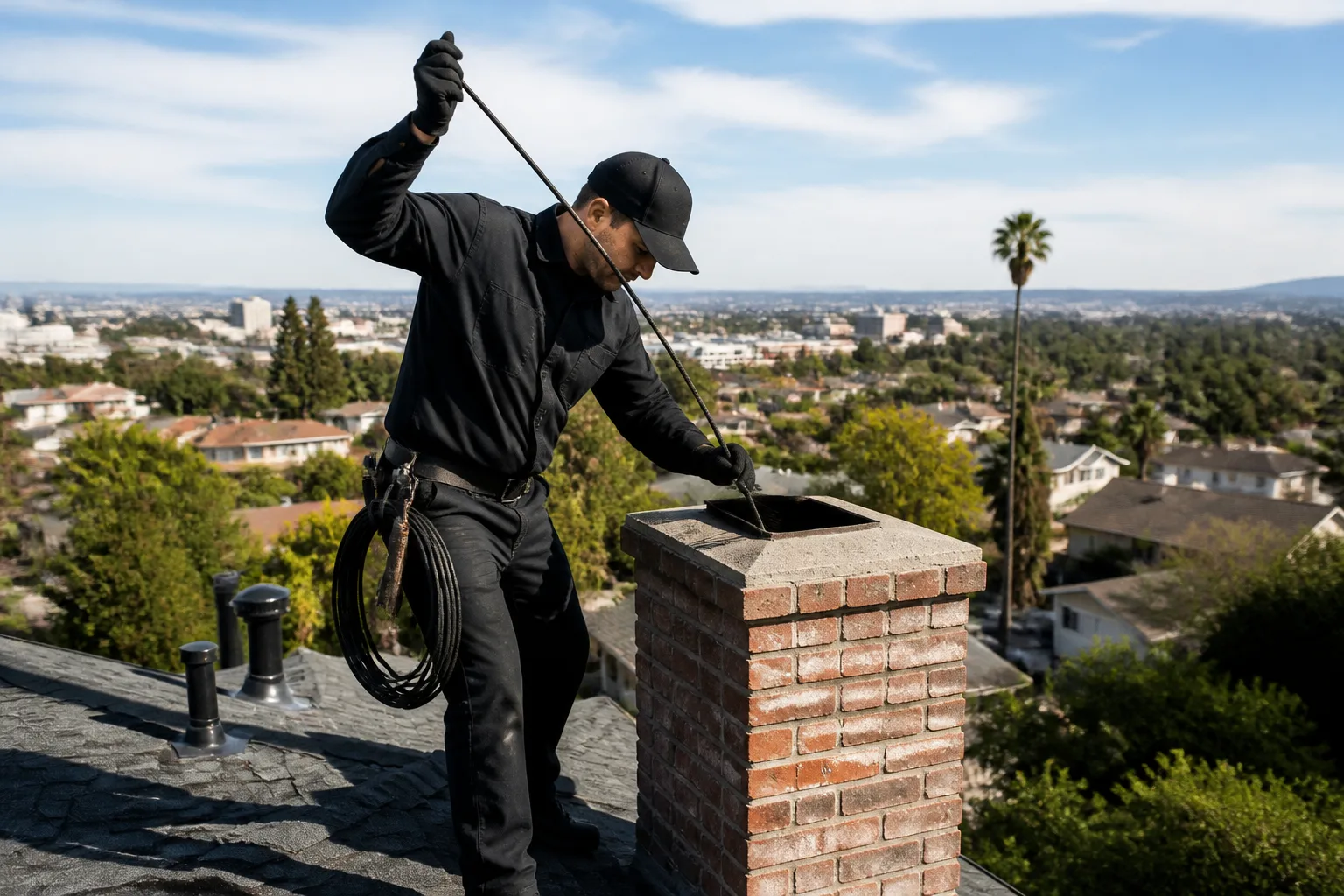
Full demolition means removing the chimney crown, breaking out the old clay tiles from above, and rebuilding the flue from scratch. That’s expensive, invasive, and often impossible without scaffolding on hillside lots. A DuraFlex liner goes in differently. The technician feeds the flexible liner down the existing flue from the roof, connects it to the appliance or fireplace at the bottom, and insulates the annular space between the liner and the old masonry. The liner becomes the new flue wall. The old clay stays in place, dormant and harmless.
That’s why the installation typically takes a day for a single-story Universal City home, and why it costs a fraction of a full flue rebuild. But the real reason we recommend DuraFlex specifically is that it’s a 316L stainless alloy designed to resist the corrosive condensate that forms when gas combustion gases hit a cool flue. Older gas appliances vented directly into an unlined or damaged masonry chimney produce acidic condensate that eats through mortar and old clay. If your Universal City home has a gas furnace or water heater venting through the chimney, a DuraFlex liner is the standard fix, not a luxury upgrade.
What Happens During a DuraFlex Installation
A DuraFlex install is a one-day job in most Universal City homes, but it’s a full day of precise work, not a casual swap. Here’s the actual sequence:
- Inspection first. Before any liner goes in, the existing flue is camera-scanned. We need to know the exact interior dimensions of the clay tile, the condition of the mortar joints, and whether there’s any obstruction from nesting birds, fallen debris, or prior repairs. If the flue isn’t structurally sound enough to support a liner, we’ll say so before any work begins.
- Sizing the liner. DuraFlex liners are measured to the flue, not guessed. A liner that’s too small creates draft problems. Too large, and it won’t fit through the existing clay tile bends. The sizing step is where a technician’s experience on Universal City’s older chimneys matters, because flue dimensions can vary even between two nearly identical homes.
- The drop. The liner is uncoiled at the roof and fed down the flue. This is the part homeowners worry about, but it’s actually the fastest step when the flue is clean. On flues with tight bends or partial obstructions, the install takes longer. That’s why we insist on a sweep and camera inspection before any reline quote, not after.
- Connection and crown. At the bottom, the liner connects to the appliance via a tee or direct connection, depending on the setup. At the top, a rain cap and a proper crown seal prevent water entry. The space between the liner and the old clay is insulated to maintain flue gas temperature, which improves draft and reduces condensation.
We don’t rush this. A reline that’s done wrong is worse than no reline, because it creates a false sense of safety. The entire point of specifying DuraFlex is that the finished result is a UL-listed system, installed according to the listing. That’s what a building inspector in LA County wants to see when you eventually sell the home or when an insurance adjuster asks for documentation of the chimney’s condition.
UL 1777 and Why It Matters in LA County
If you remember one thing from this guide, remember UL 1777. It’s the safety standard for chimney liners and relining systems in the United States, and it’s the standard that a DuraFlex liner meets. A UL 1777 listing means the liner has been tested for the temperatures, corrosion conditions, and structural demands of actual chimney service. It also means the system is acceptable under the mechanical code sections that LA County enforces for existing chimneys being relined.
Here’s why that matters for your homeowner’s insurance. When a chimney fire occurs, insurance adjusters look for the condition of the flue and whether it met code at the time of the loss. A cracked clay flue that was never addressed is a maintenance failure. A properly installed, UL-listed liner system is a repair. The distinction can mean the difference between a covered claim and a denied one. We’ve walked Universal City homeowners through this exact scenario enough times that we now mention it in every reline consultation, because nobody wants to learn about listing standards during a claim.
The same logic applies when you sell. California disclosure laws require sellers to disclose known chimney defects. A home with a documented DuraFlex reline from Chimney Repair in Universal City has a paper trail and a known system in place. A home with a mystery liner that nobody can identify invites inspection objections. When we specify the product, we’re also creating documentation that future buyers and inspectors can verify.
Questions to Ask Any Contractor Quoting a Liner
If you’re gathering quotes for a chimney reline in Universal City, the questions below will separate a specialist from a generalist. You don’t need to know everything about liner metallurgy. You need to know whether the person quoting you does.
- “What brand of liner are you quoting?” If they can’t name it, walk away. DuraFlex is one of the recognized professional lines, alongside a handful of others we trust for specific applications. “Flex pipe” is not a brand.
- “Is the liner UL 1777 listed?” This is a yes or no question. The answer should be immediate. If there’s hesitation, that tells you something.
- “Are you running a camera inspection before you quote?” Nobody can accurately size a liner or assess a flue’s true condition from a rooftop glance. A camera inspection is non-negotiable. If a quote arrives without one, it’s a guess.
- “What alloy grade is the liner?” For gas appliances, 316L stainless is the standard for corrosion resistance. For wood-burning fireplaces, 316L works as well, though some installs specify a heavier wall. The point is the contractor should know the difference and explain which one your situation calls for.
- “Who performs the install?” Liner installation is not a side job. It requires a chimney professional who has done this specific work, not a handyman who read a forum post. There’s no license for “chimney liner installer” in California, which makes this question more important, not less.
We carry DuraFlex because it’s what we’d want in our own chimneys. We also work with Causeway Chimney Sweep home product lines like HeatShield for flue resurfacing and Copperfield for chase covers and caps. The common thread is that these are the product lines specified by certified sweep associations, sourced through professional distributors. We don’t substitute. If a liner isn’t in stock, we order it and reschedule. We don’t run to the nearest big-box for a “good enough” version.
When to Call a Pro
If you’ve read this far and you’re wondering whether your Universal City chimney has a liner problem, here’s the short answer. If your home was built before 1980 and the chimney has never been relined, it’s worth a camera inspection. If you smell odors near the fireplace when it’s not in use, or if you see white staining on the brick near the crown, or if you’ve had a gas appliance venting through the chimney for years without any liner work, those are signals that a specialist should take a look. None of these are emergencies, but all of them are data points that a professional can interpret quickly.
A note on safety, because it matters here. A damaged or absent chimney liner is a carbon monoxide pathway, and carbon monoxide is odorless. If you have a gas appliance vented through a masonry chimney that hasn’t been inspected or relined, don’t wait for symptoms. Call a chimney professional for an inspection. The fix is well understood and, in most Universal City homes, it’s a one-day job once the liner is specified.
Related services in Universal City: Chimney Sweep in Universal City covers the cleaning and inspection side, including the camera work that precedes any reline decision. If you’re concerned about a lint-clogged exhaust in your laundry room, our Dryer Vent Cleaning in Universal City page explains the same materials-first approach for dryer vents.
The Bottom Line
DuraFlex is a professional-grade flexible stainless steel chimney liner system that solves the most common structural problem in Universal City’s older masonry chimneys: cracked clay flues that can’t safely vent combustion gases. It’s not a hardware-store product, and that’s the point. The difference between a UL-listed liner and a generic flex pipe is measured in years of service life and, potentially, in whether your insurance claim survives scrutiny.
If your Universal City chimney needs a reline or you just want a camera inspection to know what’s actually inside the flue, we can help. Causeway Chimney Sweep offers free estimates for chimney work in Universal City, and we’ll tell you plainly whether a DuraFlex liner is necessary or whether your existing flue has years left. Call (877) 500-2276 and we’ll schedule the inspection.
Frequently Asked Questions
A DuraFlex liner installation in Universal City typically runs between $2,800 and $5,500 depending on flue height, accessibility, and whether insulation is required. Single-story homes with straight flues sit at the lower end. Two-story homes and flues with bends run higher. The liner itself is a portion of that cost; the labor, insulation, crown work, and connections make up the rest. Call (877) 500-2276 for an exact quote after a camera inspection, which is free with our estimate.
A properly installed DuraFlex 316L stainless liner typically lasts 15 to 25 years in a gas-vent application, with wood-burning use potentially shortening that span if the chimney is not cleaned regularly. The liner’s lifespan depends on proper sizing, insulation, and annual inspection. Universal City’s mild climate works in the liner’s favor, since extreme freeze-thaw cycling is not a concern here. The old clay tile behind it decays at its own pace, but the liner carries the flue gases independently.
Not necessarily. The only way to know is a camera inspection. Many Universal City chimneys have cracked clay tiles that are technically compromised but still functioning because the cracks haven’t progressed far enough to create a gas leak path. That’s a “monitor it” situation, not an immediate reline. If the camera shows significant cracking, spalling, or missing mortar joints, a liner becomes the safe call. We don’t recommend relines based on home age alone. Call (877) 500-2276 to book the inspection and see the footage yourself.
No. Liner installation involves working at roof height on Universal City’s sloped lots, handling stainless components that can slice unprotected skin, and making connections that affect carbon monoxide safety inside your home. This is not a DIY project. It requires a trained chimney professional who understands draft, sizing, and the UL listing requirements that make the installation code-compliant. Saving money on a DIY liner install is how we end up pulling aluminum dryer vent out of someone’s chimney. Call a specialist instead.
Written by the team at Causeway Chimney Sweep, serving Universal City since 2015.
Need Chimney Cleaning Help?
Call Causeway Chimney Sweep — licensed & insured, here with fast after-hours help in Studio City.
(877) 500-2276